
What's Happening?
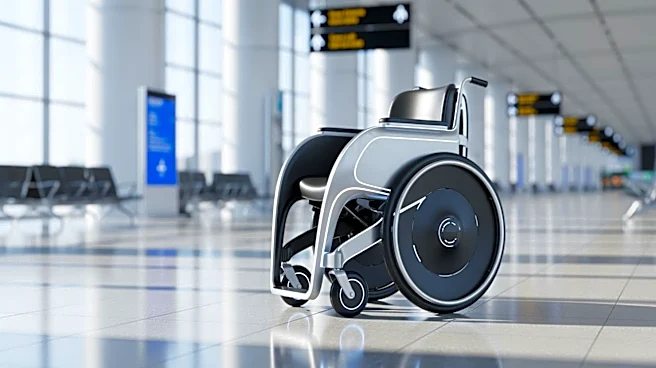
Ted Stevens Anchorage International Airport has introduced self-driving wheelchairs to assist travelers with limited mobility. The initiative, a collaboration between NANA Management Services and Alaska
Airlines, aims to enhance the travel experience by providing greater independence and dignity for passengers. The wheelchairs, equipped with cameras and sensors, navigate the airport autonomously, allowing users to move at their own pace. Passengers can request the service online or at the airport, and staff assist with the transfer to the wheelchair. The technology is part of a broader effort to improve accessibility and efficiency at the airport.
Why It's Important?
The introduction of self-driving wheelchairs at Anchorage Airport represents a significant advancement in accessibility technology, potentially setting a precedent for other airports. This innovation not only improves the travel experience for individuals with mobility challenges but also optimizes airport operations by freeing up staff to assist other passengers. As airports continue to seek ways to enhance customer service and efficiency, such technologies could become more widespread, promoting inclusivity and independence for all travelers. The initiative also highlights the role of technology in addressing societal needs and improving quality of life.
What's Next?
As the self-driving wheelchair program gains traction, Anchorage Airport may consider expanding the fleet based on passenger demand and feedback. The success of this initiative could encourage other airports to adopt similar technologies, leading to broader implementation across the aviation industry. Additionally, ongoing assessments of the program's impact on passenger satisfaction and operational efficiency will inform future enhancements. Stakeholders, including disability advocacy groups and technology developers, may collaborate to refine and expand the capabilities of such assistive technologies.