





What's Happening?
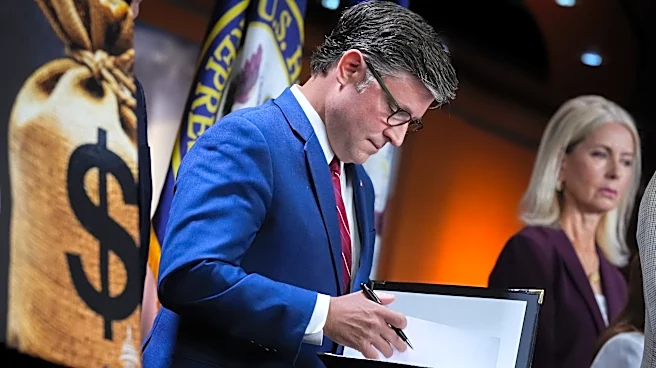
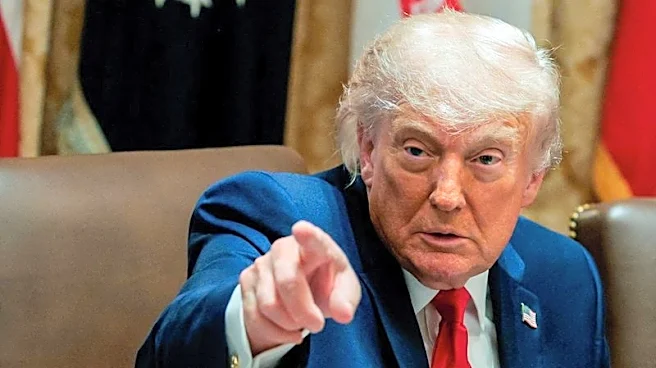
The U.S. House of Representatives has passed a war powers resolution aimed at curbing President Trump's military actions in Iran. The resolution, approved by a 215-208 vote, saw bipartisan support with four Republicans joining Democrats. This marks a significant
move to assert congressional authority over military engagements, as the conflict with Iran was initiated without congressional approval. The resolution, however, is largely symbolic and faces potential veto from the president. It underscores ongoing tensions between the executive and legislative branches over war powers and the constitutional balance of authority.
Why It's Important?
The passage of the war powers resolution reflects growing congressional unease over the scope and duration of U.S. military involvement in Iran. It highlights a constitutional debate over the president's authority to engage in military actions without explicit congressional consent. The resolution's approval could influence future legislative actions and set a precedent for congressional oversight of military engagements. It also carries political implications, as lawmakers respond to constituent concerns about the conflict's risks and costs, particularly with midterm elections approaching.
What's Next?
Despite the House's approval, the resolution is unlikely to reach President Trump's desk due to its status as a concurrent resolution, which lacks legal force. Even if it were to pass the Senate, a presidential veto is expected, requiring a two-thirds majority in Congress to override. The ongoing debate may prompt further legislative efforts to assert congressional authority over military actions, while the administration continues to justify its actions as necessary for national security. The situation remains fluid, with potential implications for U.S. foreign policy and domestic political dynamics.