
What's Happening?
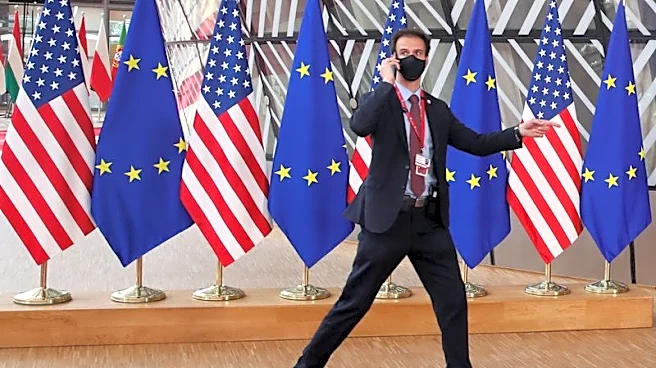
President Trump's foreign policy approach is reportedly causing a rift between the U.S. and its traditional allies. European and Asian governments are increasingly hedging against what they perceive as unreliable
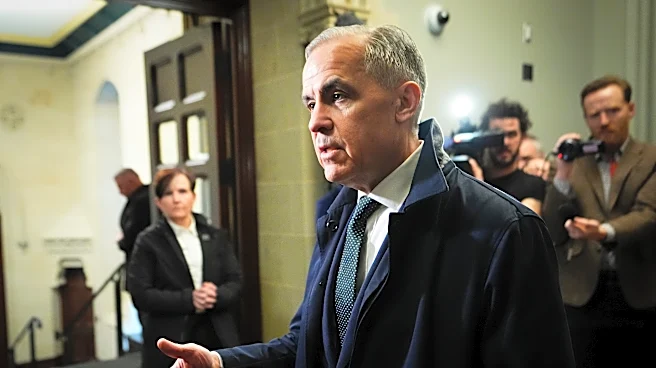
U.S. power. Trump's actions, such as his threats towards Greenland and his handling of the Iran conflict, have led to a shift in European defense strategies. The European Union is investing heavily in its own defense capabilities, aiming for strategic autonomy from the U.S. This shift is also evident in Canada, where Prime Minister Mark Carney is working to reduce economic dependence on the U.S. by diversifying trade partnerships.
Why It's Important?
The growing divide between the U.S. and its allies could have significant implications for global geopolitics. As Europe and Canada seek greater independence from U.S. influence, the traditional power dynamics within NATO and other international alliances may shift. This realignment could weaken the U.S.'s ability to lead on global issues and diminish its influence in international negotiations. The move towards strategic autonomy by U.S. allies reflects broader concerns about the reliability of U.S. commitments under President Trump's leadership, potentially leading to a more multipolar world order.
Beyond the Headlines
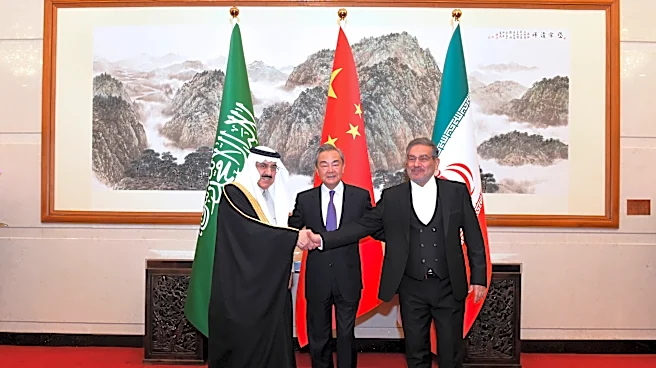
The shift in alliances may lead to long-term changes in global trade and security arrangements. As Europe and Canada pursue closer ties with other global powers, such as China, the U.S. may find itself increasingly isolated on the world stage. This could impact U.S. economic interests and its ability to project power globally. Additionally, the realignment may encourage other countries to reassess their relationships with the U.S., potentially leading to a broader reconfiguration of international alliances and partnerships.