



What's Happening?
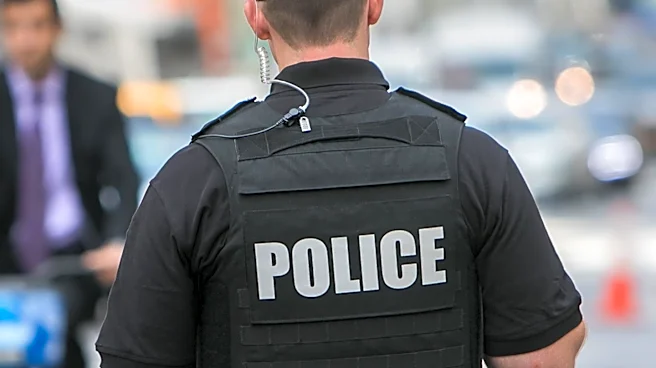
The Watertown Police Department has released its police blotter report for Monday, November 9, detailing various incidents that occurred overnight and into the morning. The report includes a range of activities such as vehicle checks, domestic disturbances,
traffic incidents, and other calls for service across Watertown and surrounding areas. Specific entries note a vehicle check near the Salvation Army, a domestic disturbance at an apartment complex, and traffic stops on various state routes. The blotter provides a snapshot of law enforcement activity, reflecting the daily operational demands on local police and emergency services.
Why It's Important?
The police blotter serves as a transparent record of daily law enforcement activities, offering the public insight into local crime and safety issues. For residents, it provides awareness of incidents occurring in their community, which can influence perceptions of safety and encourage vigilance. For local government and community leaders, the aggregated data from blotters can help identify patterns in criminal activity or areas requiring increased police presence or community intervention. This transparency is crucial for maintaining public trust in law enforcement and for fostering a collaborative approach to community safety and problem-solving.
What's Next?
The Watertown Police Department will continue to release daily police blotter reports, providing ongoing updates on local law enforcement activities. Residents can expect to see similar reports detailing various incidents as they occur. The department's new policy of delaying the release of arrest reports suggests a shift in information dissemination, which may be aimed at ensuring accuracy or protecting ongoing investigations. The continuous monitoring of these reports by community members and local media helps keep the public informed about the state of local safety and security.
Beyond the Headlines
Beyond the routine reporting of incidents, the police blotter reflects the complex and multifaceted nature of urban policing. Each entry, whether a traffic stop or a domestic disturbance, represents an interaction between law enforcement and the community, often involving sensitive situations. The sheer volume and variety of calls highlight the diverse responsibilities of police officers, extending beyond crime fighting to include public assistance, dispute resolution, and traffic management. Analyzing these reports over time can reveal underlying social issues, such as areas with higher rates of domestic disputes or traffic violations, prompting broader community discussions and potential policy interventions aimed at addressing root causes.