



What's Happening?
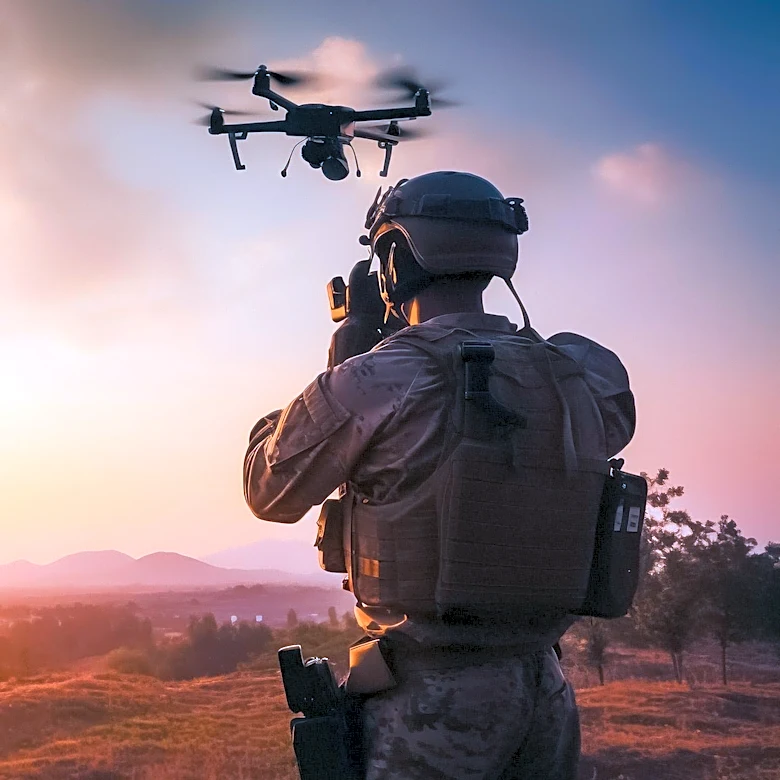
Joint Base Lindsey Graham's small unmanned aircraft system (sUAS) Program Management Office (PMO) has reached a significant milestone in drone training. The PMO recently trained 18 operators and evaluated four instructor candidates on the Skydio X10D
drone. This initiative has expanded JBLG's sUAS personnel to a total of seven instructors and 38 operators from the 437th Maintenance Group, 628th Civil Engineer Squadron, and 628th Security Forces Squadron. The training aims to enhance safety, efficacy, and innovation across the installation by equipping Airmen with advanced sUAS capabilities. Full mission employment of these drone systems is projected for calendar year 2027, following the completion and approval of Concept of Employment annexes and Mission Training Plans by each unit, as well as Air Mobility Command.
Why It's Important?
This advancement in drone training at Joint Base Lindsey Graham is crucial for modernizing military operations and improving efficiency. For the 437th Maintenance Group, sUAS technology allows for rapid and detailed inspections of C-17 Globemaster IIIs, reducing inspection times from hours to 30-45 minutes. This not only eliminates the need for hazardous high-altitude inspections by Airmen, thereby improving safety, but also significantly increases the availability of aircraft for missions. The ability to quickly return aircraft to mission-capable status directly enhances global airlift capabilities. Furthermore, the integration of drones for installation security and airfield situational awareness provides commanders with timely and accurate data, leading to better decision-making and overall sustainable readiness. This initiative demonstrates a forward-thinking approach to military logistics and security, leveraging technology to optimize resources and protect personnel.
What's Next?
The immediate next steps involve each participating unit completing their Concept of Employment annexes and Mission Training Plans, which must then be approved by the PMO and Air Mobility Command. Full mission employment of the sUAS program is anticipated for calendar year 2027. The 437th MXG aims to secure funding for a 'hive network' of drones strategically placed across the installation, enabling multiple units to utilize drones during rapid response situations. This network will provide continuous data streams to AMC, base leadership, and the System Program Office, further enhancing decision superiority. The success of this program at Joint Base Lindsey Graham could serve as a model for other military installations, potentially leading to broader adoption of sUAS technology across the U.S. Air Force for maintenance, security, and operational awareness.
Beyond the Headlines
The integration of sUAS technology into military operations, as demonstrated by Joint Base Lindsey Graham, signifies a broader trend towards automation and remote capabilities in defense. This shift has profound implications for military training, personnel safety, and operational effectiveness. By reducing human exposure to dangerous tasks and accelerating critical processes, drones are transforming how military forces conduct maintenance, surveillance, and reconnaissance. This also raises questions about the future workforce in the military, emphasizing the need for specialized skills in drone operation, data analysis, and system management. The 'hive network' concept suggests a future where autonomous systems work collaboratively, providing comprehensive real-time intelligence and support, which could redefine tactical and strategic approaches in various military domains. This technological evolution underscores a commitment to leveraging innovation for national security and operational superiority.