

What's Happening?
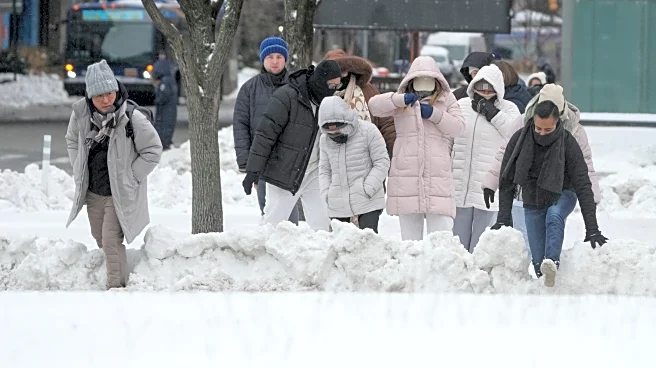
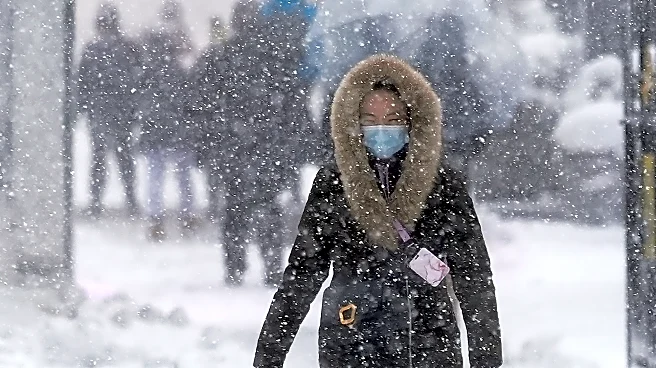
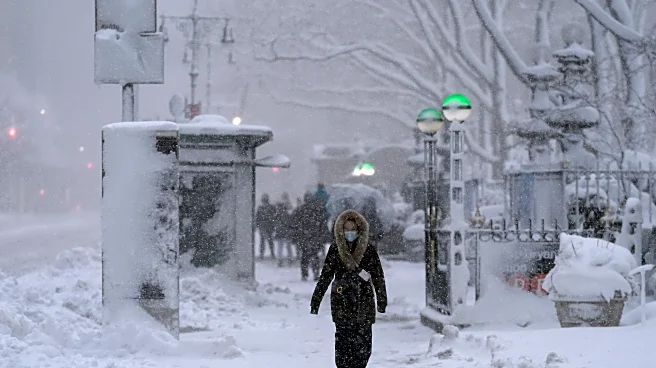
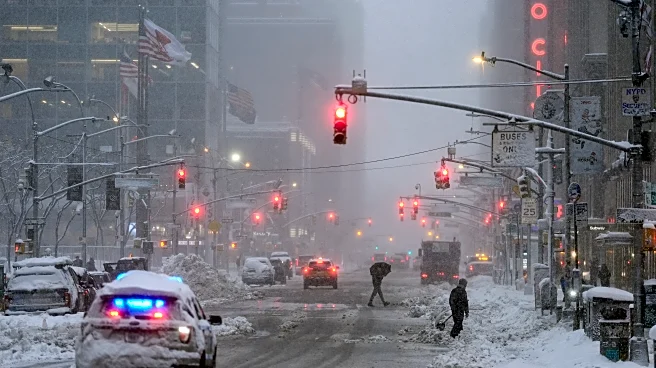
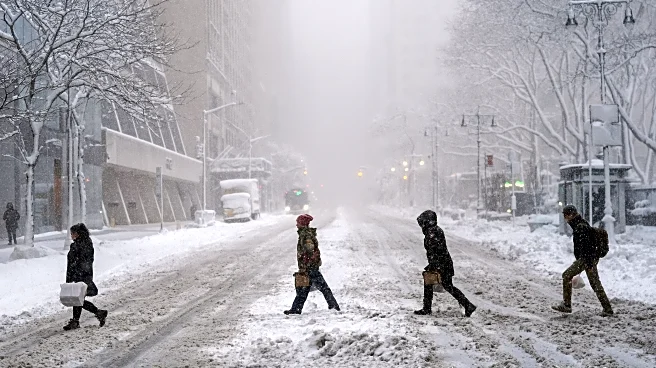
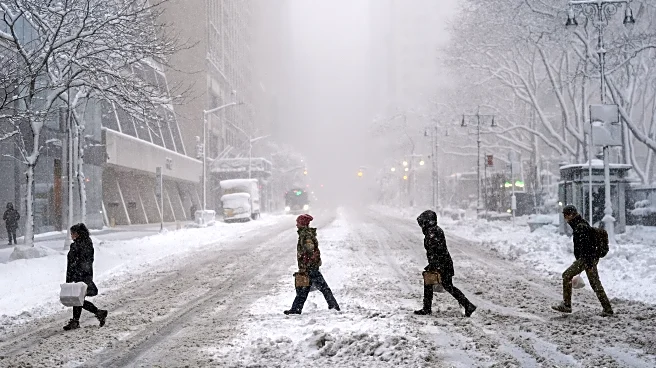
A severe blizzard has intensified across the northeastern United States, leading to travel bans and widespread power outages. The storm has brought heavy snowfall and strong winds, creating whiteout conditions and making travel extremely dangerous. More
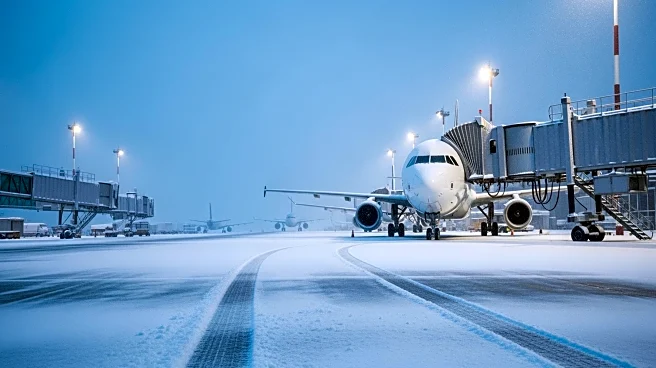
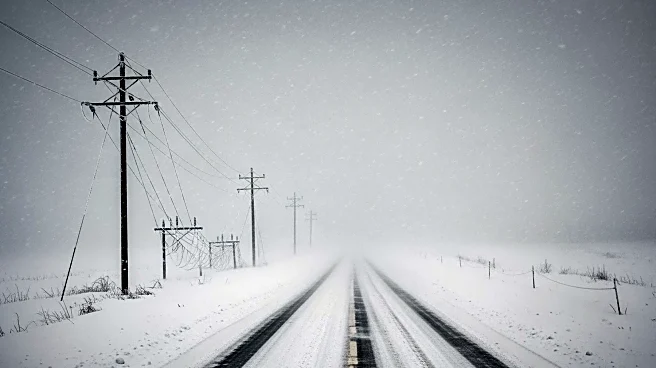
than 5,000 flights have been canceled, with significant disruptions at major airports in New York, New Jersey, and Boston. Public transportation has been suspended in several areas, and power outages have affected over 400,000 customers along the East Coast. The National Weather Service has described the storm as a 'classic bomb cyclone/nor’easter,' with snow expected to taper off by Monday afternoon.
Why It's Important?
The blizzard's impact on the Northeast is profound, affecting millions of residents and travelers. The travel bans and flight cancellations highlight the storm's disruption to transportation and the economy. Power outages pose additional challenges, particularly in cold weather, as residents face potential heating issues. The storm's intensity underscores the need for effective emergency preparedness and response strategies in the face of extreme weather events. The economic implications are also notable, with potential losses in sectors such as travel, retail, and services due to the storm's impact.
What's Next?
As the storm progresses, efforts to restore power and clear transportation routes will be critical. Utility companies are working to address outages, but high winds may delay restoration efforts. Authorities are likely to continue monitoring the situation and may extend travel bans or other emergency measures as needed. Residents are advised to stay informed about weather updates and to exercise caution when traveling. The storm's aftermath will require coordinated efforts from government agencies, utility companies, and community organizations to ensure public safety and recovery.