






What's Happening?
The United States has announced new visa restrictions targeting certain South African individuals. This decision follows persistent claims by President Trump's administration that the South African government engages in racial discrimination against its
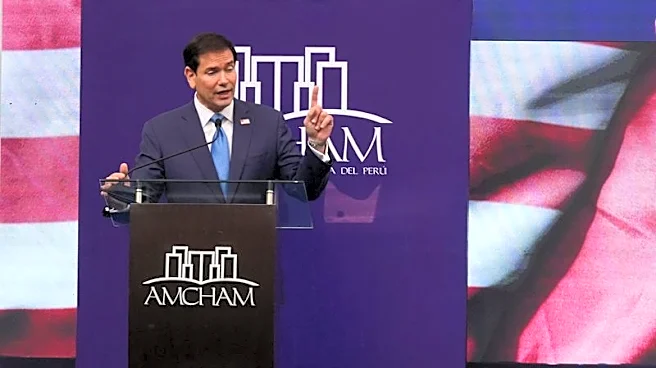
white minority, specifically Afrikaners. The U.S. Secretary of State, Marco Rubio, stated that these restrictions will apply to foreign nationals who 'enact or enable policies that promote race-based discrimination, incite violence, or enable land confiscation without compensation in South Africa.' The announcement did not specify the individuals who would be barred. This move is part of a broader pattern by the Trump administration, which has previously cut aid to South Africa, excluded it from the G20 summit in Miami, and established a refugee program for Afrikaners and other South African racial minorities, while simultaneously dismantling other refugee and asylum programs. The South African foreign ministry has responded by asserting that its policies are being misrepresented and that it is their sovereign right to implement laws addressing historical racial injustice.
Why It's Important?
This action by the U.S. government carries significant implications for diplomatic relations between the two countries and could set a precedent for how the U.S. addresses perceived racial policies in other nations. For South Africa, these visa restrictions, coupled with previous aid cuts and exclusion from international forums, could strain its economy and international standing. The U.S. stance, driven by claims of 'white genocide' and concerns over affirmative action and land expropriation, directly challenges South Africa's post-apartheid efforts to redress historical racial inequalities. The U.S. ambassador to South Africa, Leo Brent Bozell III, indicated that these visa restrictions are merely the 'first step in a series of escalatory measures,' suggesting a potential for further punitive actions. This situation highlights a clash between the U.S. administration's interpretation of racial justice and South Africa's sovereign right to implement policies aimed at correcting historical injustices, potentially impacting trade, investment, and cultural exchange.
What's Next?
The U.S. ambassador to South Africa has indicated that the visa restrictions are the initial phase of a series of escalating measures, suggesting that further actions from the U.S. government could follow if South Africa does not alter its policies. South Africa's foreign ministry has firmly stated its position, emphasizing its sovereign right to address historical racial injustice through its domestic policies. This suggests a potential for continued diplomatic tension and a lack of immediate resolution. It remains to be seen how the South African government will respond to these escalating pressures, whether through diplomatic engagement, internal policy adjustments, or by seeking support from other international partners. The implementation of these visa restrictions will likely lead to increased scrutiny of South Africa's land reform and affirmative action policies by international bodies and human rights organizations. The long-term impact on South African citizens and the country's economy will depend on the extent and duration of these U.S. measures and South Africa's strategic responses.
Beyond the Headlines
The U.S. decision to impose visa restrictions on South Africans, based on claims of anti-white discrimination, delves into complex ethical and historical dimensions. It reopens debates about the legacy of apartheid in South Africa and the ongoing efforts to achieve racial equity. The U.S. administration's narrative of 'white genocide' and its focus on land expropriation without compensation, while controversial, resonates with certain conservative viewpoints globally. This situation highlights the challenge of reconciling historical injustices with contemporary policy-making, particularly when external powers intervene. The U.S. action could inadvertently empower fringe groups in South Africa who mischaracterize the country's domestic policies, potentially exacerbating internal racial tensions. Furthermore, it raises questions about the consistency of U.S. foreign policy regarding human rights and discrimination, especially given the simultaneous dismantling of other refugee and asylum programs. The long-term cultural and social implications could include a deepening of mistrust between the two nations and a re-evaluation of international partnerships based on differing interpretations of justice and sovereignty.