



What's Happening?
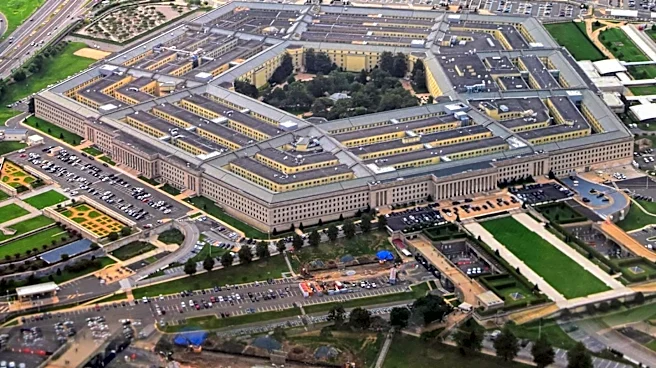
The Defense Logistics Agency Troop Support has awarded Federal Prison Industries Inc. (FPI), operating as UNICOR, an $18.5 million, five-year contract. This agreement tasks FPI with producing long-sleeve maternity T-shirt physical-fitness uniforms for the
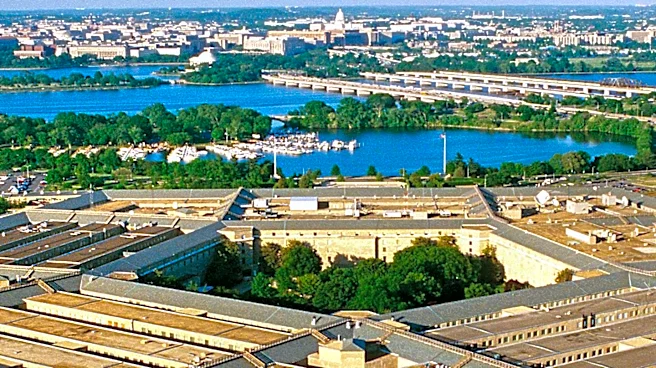
U.S. Army. The contract, dated November 10, was detailed in a Pentagon notice and reported by Cleveland.com. Funding for this initiative will be drawn from Defense Working Capital funds across fiscal years 2026 through 2031, with the ordering period extending until November 8, 2031. FPI, a self-sustaining government corporation under the Bureau of Prisons, employs and trains federal inmates who typically earn between 23 cents and $1.15 per hour. This contract was secured over seven other interested businesses, with the manufacturing work slated to occur in Georgia. This is not FPI's first engagement with the Pentagon; the company previously secured a $17 million contract for extreme-cold and wet-weather jackets and a $16 million contract for various physical-fitness T-shirts earlier in the year.
Why It's Important?
This contract highlights the U.S. military's ongoing efforts to support female service members, particularly those who are pregnant, by providing specialized uniforms. The Army estimates that approximately 16,000 female soldiers become pregnant annually, necessitating appropriate attire. The maternity uniform initiative stems from a pilot program that expanded in May 2023 to cover all continental U.S. units, offering operational camouflage-pattern maternity uniforms and T-shirts. The involvement of Federal Prison Industries in such a significant contract raises questions about the use of inmate labor in federal procurement. While FPI aims to provide employment and training for federal inmates, the low wages paid to these workers have historically drawn scrutiny. This arrangement also underscores the reliance of the Department of Defense on FPI, which derives over 50% of its sales from the DoD, for various textile and clothing products.
What's Next?
The contract's performance will take place in Georgia, though a specific facility has not been identified. Details regarding the total number of shirts to be produced, unit pricing, and the delivery schedule remain unclear from the available Pentagon notice. It is also uncertain whether the full $18.5 million ceiling will be utilized. Federal acquisition rules, specifically FAR Subpart 8.6, generally require agencies to evaluate price, quality, and delivery time against private-sector alternatives before purchasing from FPI, unless a waiver is granted. The application of this process to the current award has not been established. Future developments may include further clarification on these logistical details and potential discussions regarding the broader implications of using prison labor for military contracts, especially concerning fair competition and labor practices.
Beyond the Headlines
The awarding of this contract to Federal Prison Industries brings to the forefront the complex ethical and economic considerations surrounding prison labor in government supply chains. While FPI's mission includes inmate rehabilitation and skill development, the practice of paying inmates significantly lower wages than the federal minimum wage often sparks debate among labor advocates and human rights organizations. Critics argue that such practices can create an unfair competitive advantage over private businesses and may exploit vulnerable populations. Furthermore, FPI has faced quality control issues in the past, including a 2011 investigation detailing recalled protective helmets that failed ballistic testing. This contract could reignite discussions about the balance between providing vocational training for inmates and ensuring fair labor practices, as well as the quality and accountability standards for products supplied through such programs to critical government sectors like the military.