








What's Happening?
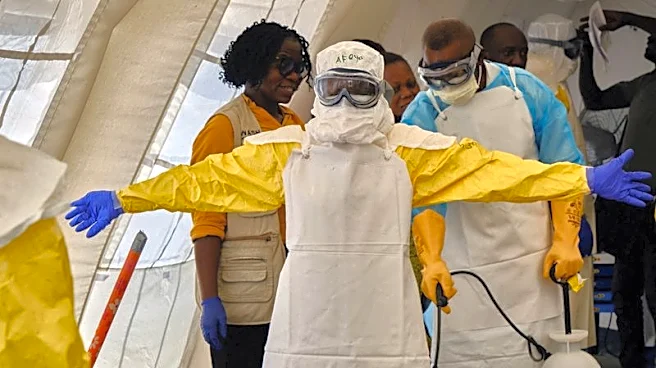
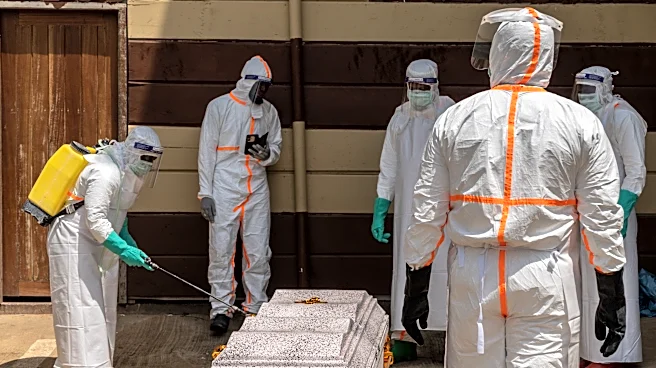
The Democratic Republic of the Congo (DRC) has reported a significant increase in Ebola cases, with 72 new cases confirmed in a single day, bringing the total to 782 cases and 181 deaths. The outbreak, caused by the Bundibugyo virus strain, has been ongoing
for a month and is primarily affecting the eastern province of Ituri. The virus has also spread to North Kivu and South Kivu provinces and crossed into Uganda. The outbreak is complicated by weak contact tracing, insecurity, and funding gaps. The World Health Organization is intensifying efforts to improve testing and contact tracing, while the Africa Centers for Disease Control and Prevention is deploying technical expertise to support the response.
Why It's Important?
The Ebola outbreak in the DRC poses a significant threat to public health and regional stability. The rapid spread of the virus, coupled with the lack of an approved vaccine or treatment for the Bundibugyo strain, presents a major challenge for containment efforts. The outbreak's impact is further exacerbated by ongoing conflicts and displacement in the region, which hinder effective contact tracing and surveillance. The situation highlights the need for increased international support and coordination to prevent further spread and mitigate the outbreak's impact on vulnerable populations. The DRC's complex socio-political environment adds to the challenges of managing the outbreak.
What's Next?
Efforts to contain the Ebola outbreak in the DRC will likely intensify, with increased international support and resource mobilization. The World Health Organization and Africa CDC are expected to continue deploying technical expertise and resources to enhance surveillance, testing, and community engagement. However, challenges such as insecurity, funding gaps, and community resistance may hinder progress. The international community's response, including financial and logistical support, will be crucial in determining the outbreak's trajectory. Monitoring the situation closely will be essential to prevent further regional spread and to protect public health.
Beyond the Headlines
The Ebola outbreak in the DRC highlights broader issues of health system resilience and the need for sustainable development in conflict-affected regions. The crisis underscores the importance of addressing underlying social and economic factors that contribute to health vulnerabilities. Long-term solutions may involve strengthening health infrastructure, improving access to healthcare, and fostering peace and stability in the region. The outbreak also raises ethical considerations regarding resource allocation and the prioritization of health interventions in resource-limited settings.