

What's Happening?
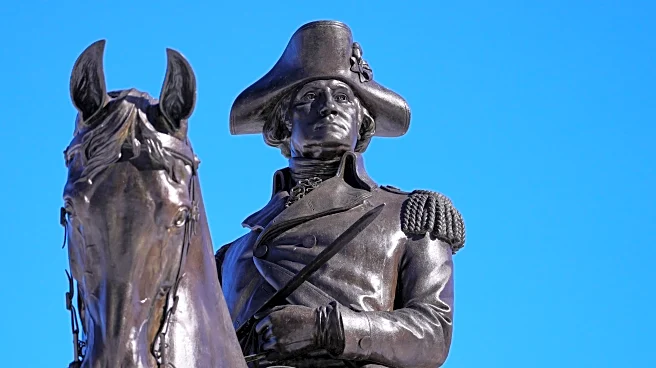
As the United States celebrates George Washington's 294th birthday, the relevance of his legacy is being re-examined in the context of current political and social challenges. Washington, recognized as the architect of American democracy, set precedents
that continue to underpin the nation's governance. His voluntary relinquishment of power after two terms as president was a groundbreaking act that authenticated the democratic process in the United States. This act, along with his earlier decision to surrender his military commission to Congress, demonstrated his commitment to democracy over personal power. Washington's establishment of the Cabinet system and his warnings against political factionalism are seen as foundational to the country's political stability. In recognition of his enduring influence, Mount Vernon has undergone a significant $40 million preservation effort to maintain Washington's home, offering visitors a tangible connection to his life and legacy.
Why It's Important?
George Washington's legacy is crucial as the United States faces unprecedented challenges to its democratic institutions. His example of prioritizing national unity and democratic principles over personal power serves as a guide for navigating current political divisions. The peaceful transfer of power, a hallmark of Washington's presidency, is particularly relevant today as it underscores the importance of maintaining democratic norms. The preservation of Mount Vernon not only honors Washington's contributions but also provides a historical context that can inspire contemporary leaders and citizens to uphold the values he championed. As the nation approaches its 250th anniversary, reflecting on Washington's leadership offers a roadmap for addressing modern political and social issues.
What's Next?
Mount Vernon is marking the nation's 250th anniversary with a series of exhibitions and programs that explore Washington's legacy and the founding of the republic. These initiatives aim to educate the public about the historical significance of Washington's contributions and their relevance to current democratic practices. The preservation efforts at Mount Vernon are expected to enhance public engagement with American history, fostering a deeper understanding of the principles that have shaped the nation. As political leaders and citizens reflect on Washington's example, there may be renewed efforts to strengthen democratic institutions and promote national unity.
Beyond the Headlines
The preservation of Mount Vernon highlights the broader cultural and historical significance of maintaining national heritage sites. This effort underscores the role of historic preservation in educating future generations about foundational democratic principles. The involvement of the Mount Vernon Ladies’ Association, which initiated the preservation of Washington's home in the 19th century, exemplifies the impact of civic engagement in safeguarding national history. As the United States grapples with political polarization, Washington's legacy serves as a reminder of the importance of collaborative governance and the need to prioritize the common good over partisan interests.