








What's Happening?
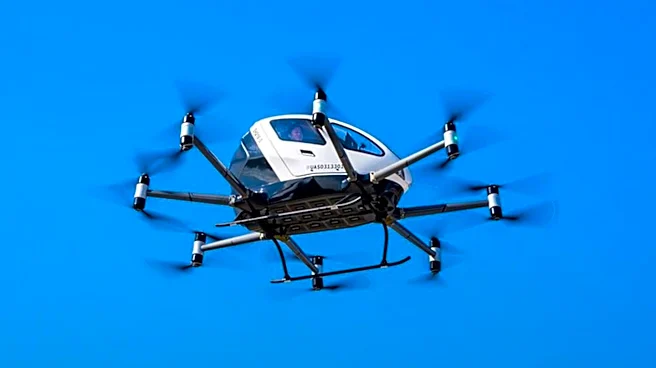
The U.S. Army has established a new policy requiring that soldiers receive new technology, particularly drones, at least 180 days before entering combat training exercises. This rule aims to provide troops with sufficient time to integrate and understand
the equipment at their home station, rather than attempting to learn it while simultaneously preparing for warfighting operations. Lt. Gen. James Isenhower, commander of the Army's Combined Arms Command, stated that this decision stems from the realization that soldiers were being overwhelmed by the dual demands of learning unfamiliar technology and focusing on combat readiness. The Army is pushing to deploy thousands of drones across its formations in the coming years, and this new temporal threshold is designed to ensure effective utilization of these advanced systems.
Why It's Important?
This policy change is crucial for enhancing the effectiveness and safety of U.S. Army personnel in modern warfare. By providing adequate time for technology integration, the Army aims to prevent situations where soldiers are distracted by learning new equipment during critical training phases, thereby improving their focus on combat tactics and enemy engagement. This initiative underscores the Army's commitment to leveraging advanced technology, such as drones, while recognizing the human element in military operations. It also highlights a broader strategic shift towards incorporating uncrewed systems more deeply into military formations. The success of this approach could lead to more efficient and technologically proficient fighting forces, ultimately impacting national security and military readiness in an evolving global threat landscape.
What's Next?
The Army will continue to implement and refine this 180-day rule, ensuring that units receive new technologies well in advance of their combat training cycles. This will involve adjustments in procurement, distribution, and training schedules to align with the new temporal threshold. The service will likely monitor the effectiveness of this policy through feedback from soldiers and performance during exercises. Furthermore, the Army's ongoing approach to integrating drones will involve developing comprehensive strategies for disseminating lessons learned and best practices across all formations. This includes continued experimentation with new systems and potentially further adjustments to training methodologies to maximize the benefits of technological advancements while minimizing disruption to combat readiness.
Beyond the Headlines
This policy reflects a deeper understanding within the military of the cognitive load placed on soldiers in an increasingly technologically advanced battlefield. It acknowledges that simply providing cutting-edge equipment is insufficient; effective integration requires dedicated time and training. This shift could lead to a re-evaluation of how new technologies are introduced across various military branches, emphasizing a more soldier-centric approach to technological adoption. Ethically, it prioritizes the well-being and operational effectiveness of troops by reducing stress and improving their proficiency before high-stakes training. Culturally, it may foster a more adaptive and technologically literate military force, capable of seamlessly incorporating future innovations. The long-term implication is a more resilient and capable U.S. Army, better prepared for the complexities of modern and future conflicts.