






What's Happening?
Two former Canadian ambassadors to the United States, Derek Burney and David MacNaughton, have cautioned Canada against prioritizing Europe for trade diversification. Testifying before the House of Commons foreign affairs committee, Burney stated that
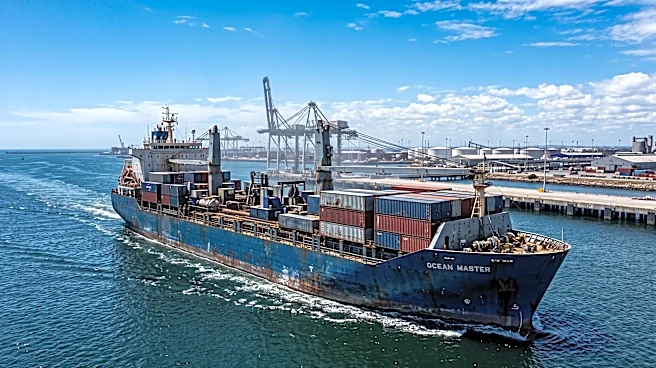
Canada might be 'wasting too much time' on the European region, citing the nine-year approval process for the CETA agreement as an example of slow progress. Both diplomats argued that Asia presents more substantial trade opportunities for Canadian exports, particularly in natural resources like LNG, oil, and critical minerals. This advice comes as Canada seeks to diversify its trade relationships amidst ongoing trade tensions with the United States. While Canada has pursued stronger ties with the European Union, including an 'Alliance for the Future' and an LNG supply agreement with Germany, Burney highlighted the EU's complex bureaucracy and regulatory regime as unattractive to many Canadian businesses seeking pragmatic deals. MacNaughton echoed these sentiments, pointing to Europe's economic state and regulatory hurdles as significant challenges for quick export expansion.
Why It's Important?
This perspective from experienced diplomats underscores a critical debate within Canada regarding its trade strategy, which has direct implications for the U.S. The U.S. remains Canada's largest trading partner, and any significant shift in Canadian trade policy, whether towards Europe or Asia, could alter the dynamics of North American trade. If Canada reduces its focus on European markets and intensifies efforts in Asia, it could lead to increased competition for U.S. exports in Asian markets or potentially free up Canadian resources for trade with the U.S. Conversely, a less diversified Canadian economy, heavily reliant on the U.S., could make Canada more vulnerable to U.S. trade policies, impacting cross-border supply chains and economic stability. The advice suggests that Canada's pursuit of trade diversification, while aimed at reducing dependence on the U.S., might be more effectively achieved by looking eastward rather than across the Atlantic, potentially influencing future trade agreements and economic partnerships that could indirectly affect U.S. economic interests.
What's Next?
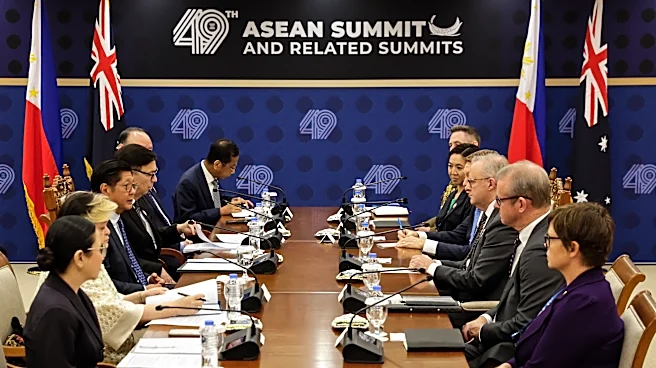
Following the recommendations of former ambassadors, Canada may re-evaluate its trade diversification strategy, potentially shifting focus and resources from European initiatives towards strengthening ties with Asian economies. This could involve accelerating negotiations for free trade agreements with more Asian nations, similar to recent agreements with ASEAN countries and the Philippines. The Canadian government might also prioritize investments in infrastructure to support the export of natural resources to Asia, such as LNG facilities. Such a strategic pivot could lead to increased trade flows between Canada and Asia, potentially altering global supply chains and commodity markets. For the U.S., this could mean a more stable, albeit still dominant, trade relationship with Canada, as Canada seeks to reduce its overall vulnerability to any single trading partner. Future Canadian trade missions and policy announcements will likely reflect this ongoing debate about the most effective path to trade diversification.
Beyond the Headlines
The discussion about Canada's trade diversification strategy highlights a broader geopolitical trend where nations are re-evaluating their economic alliances in response to global trade tensions and shifting economic powers. For Canada, the advice to look beyond Europe and towards Asia reflects a pragmatic assessment of market opportunities and regulatory environments. This strategic reorientation could have long-term implications for Canada's economic identity, potentially solidifying its role as a key supplier of natural resources to rapidly growing Asian economies. It also implicitly acknowledges the enduring gravitational pull of the U.S. economy, suggesting that while diversification is necessary, completely decoupling from the U.S. is impractical. The emphasis on Asia also points to the increasing economic influence of the Indo-Pacific region, compelling Western nations to adapt their trade policies to this evolving global landscape. This strategic recalibration is not just about economics but also about Canada's geopolitical positioning in a multipolar world.