







What's Happening?
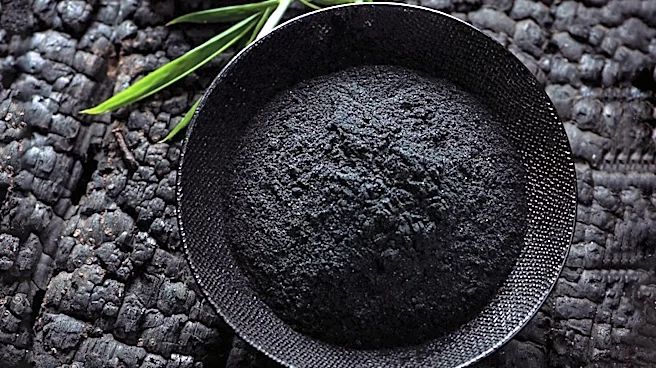
Biochar is increasingly becoming a prominent commodity in Carbon Dioxide Removal (CDR) efforts, with new plants emerging in locations like Utah and Romania, and new pre-purchase deals being finalized. A recent development involves a pilot project in Singapore
where biochar is being mixed into hot-mix asphalt for road paving. This application is significant as it moves biochar beyond experimental stages into a more widespread industrial use. However, concerns have been raised regarding the durability of biochar's carbon sequestration claims when integrated into construction materials, specifically asphalt. Experts like Kevin Lee Caster and Geoengineering Info have highlighted a 'durability gap,' questioning whether the carbon content measured from the feedstock truly translates to the carbon content remaining in the finished product after processing. Hot-mix asphalt production involves high temperatures (150-180°C), mechanical shear, hydrocarbon binders, and oxygen exposure, conditions that differ significantly from the inert lab environments where biochar's thermal stability is typically assessed. The core question revolves around how much of the fixed carbon in biochar survives the mixing process and avoids volatilization or oxidation before the asphalt cools and cures.
Why It's Important?
The durability of biochar in asphalt paving has significant implications for the carbon removal industry and for buyers of carbon credits. If a substantial portion of biochar's fixed carbon is lost during the asphalt mixing process, the actual carbon sequestration achieved per lane-kilometer of road would be materially lower than initial estimates based on feedstock. This discrepancy could undermine the credibility of biochar as a reliable carbon sink in construction applications. For buyers, this means that pre-purchases tied to construction-embedded biochar should specify measurement at the finished-product stage, rather than solely at the pyrolysis stage, to ensure accurate accounting of sequestered carbon. The potential for a divergence between feedstock mass-balance and finished-product carbon-balance could lead to overestimations of carbon removal, impacting the integrity of carbon markets and the effectiveness of climate mitigation strategies. Conversely, if losses are negligible, biochar-in-asphalt could offer a genuinely durable carbon sink with additional co-benefits, such as binder replacement and improved rutting resistance in pavements, making it a valuable solution for both infrastructure and environmental goals.
What's Next?
The immediate next step involves obtaining and publicly releasing pre/post fixed-carbon assays from the Singapore asphalt paving trial. This data is crucial for determining the actual survival rate of biochar's fixed carbon during the hot-mix asphalt process. Operators in the biochar industry, particularly those involved in construction material applications, are encouraged to publish paired assays (post-pyrolysis fixed carbon versus post-mixing fixed carbon) to enhance the credibility and transparency of this carbon removal pathway. Such data would provide concrete evidence regarding the durability of biochar in these conditions, allowing for more accurate carbon accounting and fostering greater confidence among buyers and investors. The Singapore team is uniquely positioned to be the first to provide this critical information. The outcome of these assays will likely influence future investment, regulatory frameworks, and the broader adoption of biochar in construction, potentially solidifying its role as a key industrial commodity in carbon removal efforts or prompting adjustments in how its sequestration potential is evaluated.
Beyond the Headlines
The debate over biochar's durability in asphalt extends beyond immediate carbon accounting to broader ethical and scientific considerations within the geoengineering and carbon removal sectors. The emphasis on accurate measurement at the finished-product stage highlights a critical need for rigorous scientific validation in emerging climate technologies. Without transparent and verifiable data, there is a risk of 'greenwashing' or overstating environmental benefits, which could erode public trust and divert resources from more effective climate solutions. This situation also underscores the challenge of integrating novel materials into existing industrial processes, where the interaction between the new material and the manufacturing environment can significantly alter its intended properties. The call for detailed assays reflects a growing demand for accountability and scientific integrity in the rapidly expanding carbon removal industry. Furthermore, the potential for biochar to offer co-benefits beyond carbon sequestration, such as improving pavement performance, suggests a future where climate solutions are integrated into infrastructure development, creating multi-faceted benefits for society and the environment.