
What's Happening?
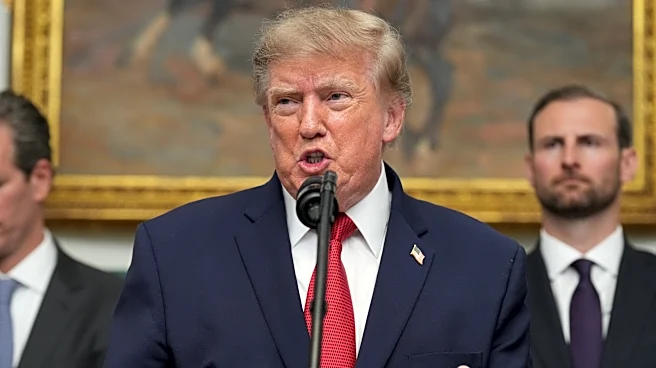
Governor Greg Gianforte recently conducted visits to agricultural producers in Cascade and Judith Basin counties as part of his 56 County Tour. In Cascade County, he toured Third Day Family Farms, a flower
farm in Vaughn that has been producing and selling fresh flowers for nearly ten years, including 53,000 tulips grown in their greenhouse during winter. The farm also offers a subscription service for fresh bouquets. Subsequently, Governor Gianforte visited Heartland Seed Company in Moccasin, Judith Basin County. This company, founded over 30 years ago by local farmers Bing VonBergen and Steve Grove, specializes in producing high-quality seed and treatment solutions for various crops across Montana. The governor also received updates on the ongoing harvest season, particularly as the pulse season commences. These visits underscore the governor's focus on supporting Montana's agricultural sector and expanding value-added agriculture opportunities.
Why It's Important?
Governor Gianforte's emphasis on value-added agriculture is significant for Montana's economy, particularly for small businesses and farms. By supporting producers who add value to their agricultural products, the state aims to enable them to capture a larger share of the revenue they generate. This initiative can lead to increased profitability and sustainability for local agricultural enterprises. Furthermore, the governor has taken concrete steps to support these businesses by raising the exemption on Montana’s Business Equipment Tax, effectively eliminating this tax for over 5,000 small businesses, farms, and ranches. This tax relief can reduce operational costs, encourage investment, and foster growth within the agricultural sector, ultimately strengthening the state's rural economies and creating more resilient local food systems.
What's Next?
The Montana Department of Agriculture, under Governor Gianforte's leadership, is expected to continue its focus on developing and expanding value-added agriculture opportunities across the state. This may involve further policy initiatives, grant programs, or educational resources aimed at helping producers innovate and diversify their offerings. The ongoing support for small businesses through tax exemptions is likely to remain a key component of the state's economic strategy for the agricultural sector. Future tours and engagements by the governor could further highlight successful models of value-added agriculture and identify new areas for growth and investment. The state will also likely monitor the impact of these policies on the overall economic health of Montana's farms and ranches.
Beyond the Headlines
The focus on value-added agriculture reflects a broader trend in the U.S. agricultural landscape towards greater localization and diversification. By encouraging producers to process, package, or otherwise enhance their raw agricultural products, Montana is fostering a more robust and self-sufficient local economy. This approach not only benefits individual farmers by increasing their income potential but also strengthens community ties by providing consumers with locally sourced, specialized products. It also addresses issues of food security and regional economic resilience by reducing reliance on external markets for processed goods. The policy of tax exemptions for small agricultural businesses also highlights a recognition of the unique financial pressures faced by these enterprises, aiming to create a more favorable operating environment.