




What's Happening?
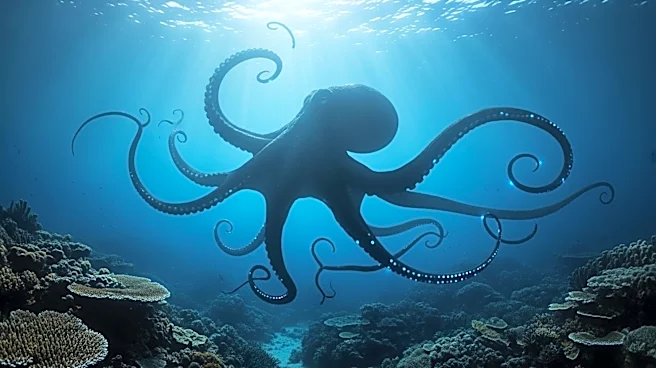
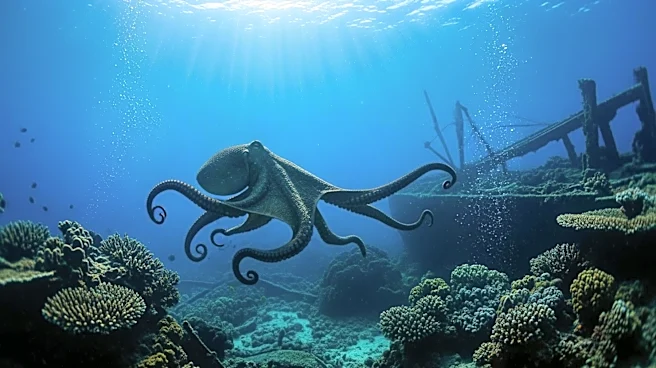
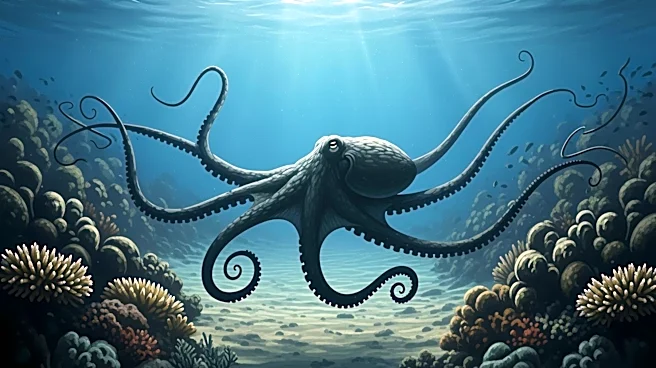
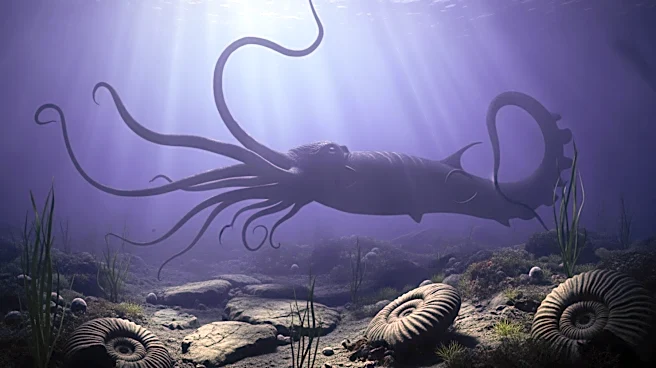
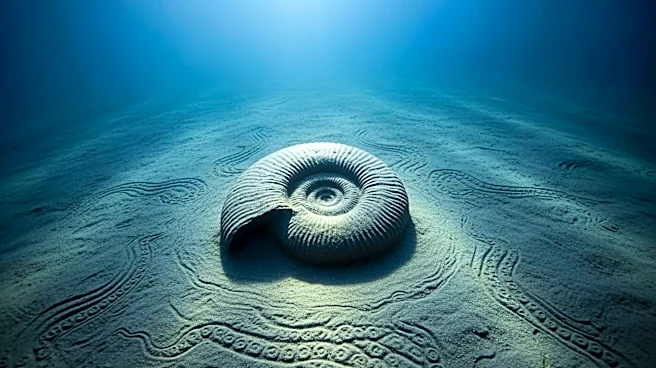
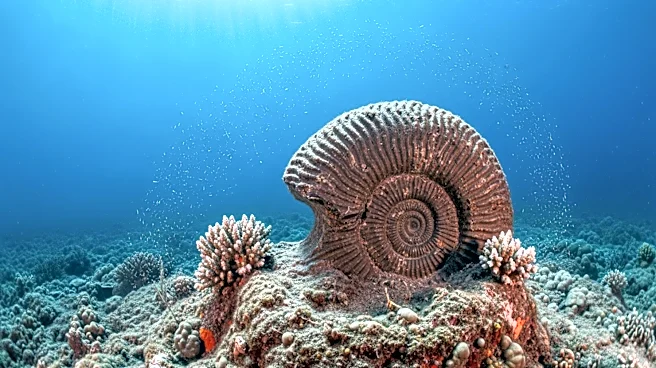
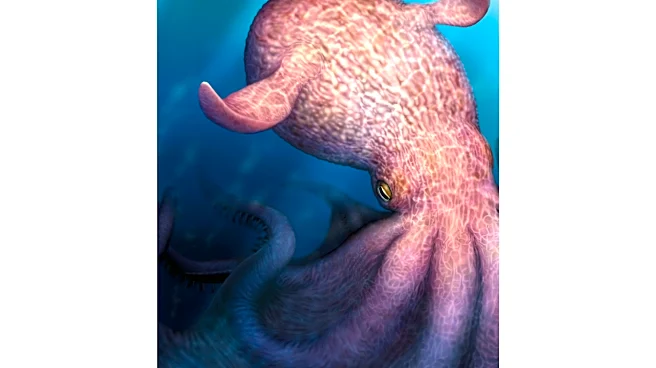
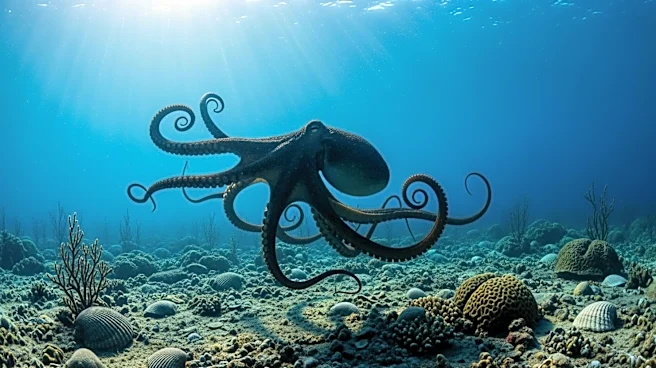
Researchers have uncovered evidence of ancient colossal octopuses from the late Cretaceous period, believed to be the largest invertebrates ever described. Using digital fossil-mining techniques, scientists found octopus jaws within large rocks, suggesting
these creatures could reach lengths of up to 60 feet. The findings, published in the journal Science, reveal that these octopuses likely preyed on hard-shelled marine animals and exhibited advanced predatory behaviors. The discovery provides new insights into the evolutionary history of octopuses and their role in ancient marine ecosystems.
Why It's Important?
This discovery significantly enhances our understanding of marine life during the Cretaceous period, highlighting the diversity and complexity of ancient ocean ecosystems. The existence of such large invertebrates challenges previous assumptions about the size and capabilities of prehistoric marine predators. The findings also contribute to the broader field of paleontology by demonstrating the potential of new fossil reconstruction techniques. This research may inspire further studies into the evolutionary adaptations and ecological roles of ancient marine species.
What's Next?
Future research may focus on exploring other potential fossil sites using similar techniques to uncover more about the life and environment of the Cretaceous period. Scientists may also investigate the evolutionary pathways that led to the development of such large invertebrates and their eventual extinction. The study could prompt a reevaluation of existing theories about marine life evolution and the factors influencing biodiversity in ancient oceans.