






What's Happening?
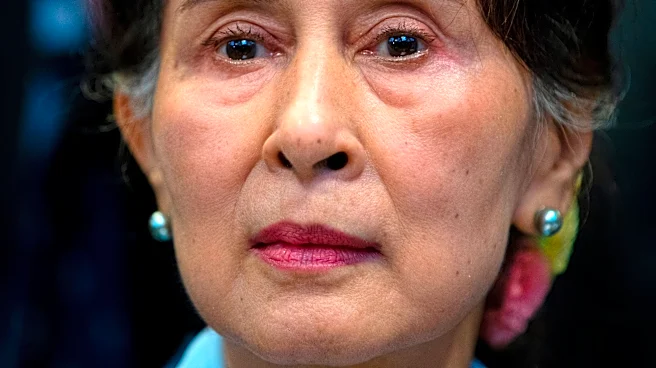
Myanmar's military junta has transferred former leader Aung San Suu Kyi from prison to house arrest, as announced by state television. This move is part of a broader amnesty tied to a Buddhist religious holiday, which saw the reduction of sentences for 1,519
prisoners, including 11 foreigners. Suu Kyi, who was initially sentenced to 33 years in prison for various charges, has had her sentence reduced to 18 years following recent amnesties. The junta's leader, Min Aung Hlaing, who was recently sworn in as president, has framed these actions as efforts to promote social reconciliation and peace. The transfer of Suu Kyi, who has been detained since the military coup in 2021, is seen as a gesture of goodwill by the junta. However, her exact location remains undisclosed, and her health condition has been a subject of concern, with reports of declining health over the past years.
Why It's Important?
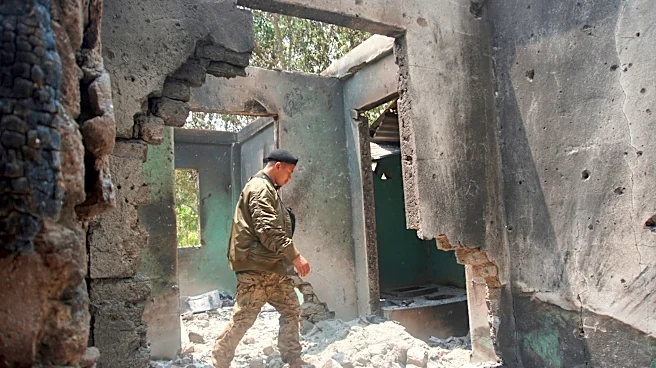
The transfer of Aung San Suu Kyi to house arrest is significant as it reflects the junta's attempt to improve its international image and possibly ease internal tensions. Suu Kyi is a prominent figure in Myanmar's pro-democracy movement, and her detention has been a focal point of international criticism against the military regime. The amnesty and her transfer could be seen as a strategic move by the junta to placate both domestic and international critics. However, the broader implications for Myanmar's political landscape remain uncertain, as thousands of political prisoners are still detained, and the country continues to experience civil unrest. The international community, including the United Nations, has called for the release of all political prisoners as a step towards a credible political process.
What's Next?
The international community will likely continue to monitor the situation closely, with calls for further actions towards democratic reforms in Myanmar. The junta's recent actions may lead to increased diplomatic engagement, but skepticism remains about the regime's commitment to genuine political dialogue. Domestically, the transfer of Suu Kyi might influence the dynamics of resistance movements, although the impact on the ongoing civil conflict is uncertain. The junta's future actions, including potential further amnesties or political concessions, will be critical in shaping Myanmar's path towards stability.
Beyond the Headlines
The transfer of Aung San Suu Kyi to house arrest highlights the complex interplay between political power and human rights in Myanmar. It raises questions about the junta's long-term strategy and its willingness to engage in meaningful political reform. The situation also underscores the challenges faced by pro-democracy activists in the country, who continue to push for change despite severe repression. The international community's response will be crucial in influencing the junta's actions and supporting the broader struggle for democracy in Myanmar.