



What's Happening?
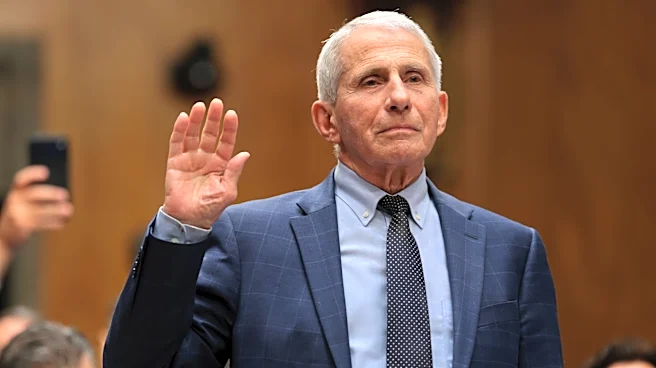
Recently released pandemic-era text messages from Dr. Anthony Fauci, former head of the National Institute of Allergy and Infectious Diseases (NIAID), have revealed private concerns regarding the safety of COVID-19 vaccines for pregnant women. In January
2021, Fauci exchanged texts with then-Surgeon General Vivek Murthy and CDC Director Rochelle Walensky, noting that the significant cytokine storm and fever experienced by many after the second vaccine dose could theoretically be associated with miscarriage in the first trimester. Days later, he advised that pregnant women should weigh the potential risks versus benefits. However, in a subsequent public discussion, Fauci stated that the CDC found "no red flags" in a study involving 10,000 pregnant women, a statement that appears to contradict his earlier private hypotheses. These texts were released by Republican Senators Rand Paul and Ron Johnson, both critics of Fauci.
Why It's Important?
This revelation is significant as it highlights a potential discrepancy between private scientific discussions among top public health officials and their public communications during a critical period of the pandemic. The perceived lack of transparency could further erode public trust in health institutions and government officials, particularly concerning vaccine safety and efficacy. For pregnant women and their families, the information suggests that there was more uncertainty about vaccine risks than was publicly acknowledged, potentially influencing their medical decisions. The incident also fuels ongoing debates about the balance between reassuring the public and fully disclosing scientific uncertainties, especially during a public health crisis. This situation could lead to increased scrutiny of how public health information is disseminated and the ethical responsibilities of officials.
What's Next?
The release of these text messages is likely to intensify calls for greater transparency from public health agencies and officials. Political figures and civil society groups may demand investigations or hearings to understand the full extent of the information withheld from the public and the rationale behind such decisions. This could lead to policy changes regarding public health communication protocols, emphasizing the need for officials to openly discuss scientific uncertainties. Furthermore, the incident may prompt a re-evaluation of the data and studies related to COVID-19 vaccine safety in pregnant women, potentially leading to updated guidelines or more detailed public advisories. The long-term impact could be a more cautious approach to public health messaging, with a greater emphasis on acknowledging evolving scientific understanding.
Beyond the Headlines
Beyond the immediate political and public health implications, this event touches on deeper issues of scientific integrity, public trust, and the challenges of communicating complex medical information during a crisis. The perceived inconsistency between private concerns and public assurances raises questions about the role of scientific leadership in managing public perception versus presenting unvarnished scientific reality. It also highlights the inherent difficulty in making rapid, high-stakes decisions with incomplete data, a common challenge in emerging pandemics. The incident could contribute to a broader societal skepticism towards expert authority, potentially impacting future public health initiatives. Ethically, it underscores the tension between protecting public health through widespread vaccination and ensuring fully informed consent, especially for vulnerable populations like pregnant women. This situation may lead to a re-examination of the ethical frameworks guiding public health communication in future crises.