





What's Happening?
Christopher Miller, a visiting assistant professor of philosophy, politics, economics, and law (PPEL) at the University of Richmond, has published an article titled “Seeing the Climate from Above: U.S. Policy Options and Economic Elite Attitudes” in the academic
journal Acta Politica. The publication, announced on November 13, 2026, focuses on the perspectives of economic elites regarding U.S. climate policy options. This research contributes to the ongoing academic discourse surrounding environmental policy and the influence of various societal groups on its formation and implementation. The article delves into the complexities of how different policy approaches are perceived and potentially supported or opposed by influential economic figures within the United States. This academic contribution highlights the University of Richmond's faculty engagement in contemporary policy debates.
Why It's Important?
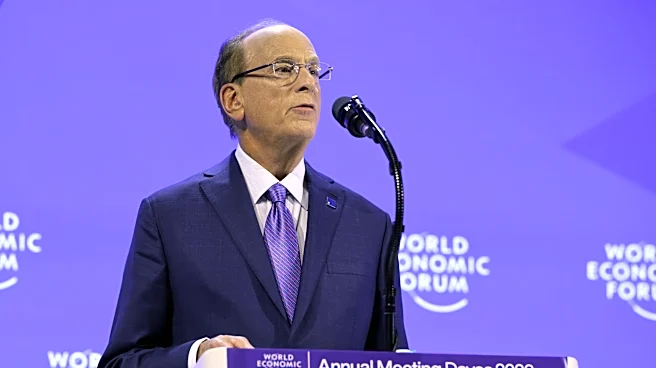
This publication is important because it sheds light on the attitudes of economic elites towards U.S. climate policy, a critical factor in the nation's ability to address environmental challenges. The perspectives of these influential groups can significantly impact policy development, funding, and public acceptance of climate initiatives. Understanding their views can help policymakers and advocates tailor strategies to gain broader support for climate action. If economic elites are resistant to certain policies, it could lead to slower progress on climate goals, potentially affecting various sectors from energy to agriculture. Conversely, if their attitudes are favorable, it could accelerate the adoption of innovative solutions and investments in sustainable practices, influencing the U.S. economy and its global standing in environmental leadership. The research provides valuable insights into the political economy of climate change.
What's Next?
The publication of Professor Miller's research is likely to contribute to ongoing academic and policy discussions regarding climate change. Researchers and policymakers may utilize these findings to better understand the dynamics of climate policy formation and the role of economic stakeholders. Future research could expand on these findings by exploring how these attitudes evolve over time or how they compare with those of other influential groups. The insights gained could inform advocacy efforts aimed at influencing economic elites to support specific climate policies. Additionally, the University of Richmond may highlight this publication as an example of its faculty's contribution to significant national and international debates, potentially fostering further research and engagement in the field of environmental policy.
Beyond the Headlines
Beyond the immediate academic contribution, Professor Miller's research touches upon the broader ethical and societal implications of climate change policy. The attitudes of economic elites often reflect a complex interplay of economic interests, ideological beliefs, and perceived risks or opportunities. This research implicitly raises questions about the distribution of responsibility for climate action and the potential for disproportionate influence by certain groups. It also highlights the challenge of reconciling economic growth with environmental sustainability, a central tension in contemporary policy debates. Understanding these underlying dynamics is crucial for fostering a more equitable and effective approach to climate change, ensuring that policies are not only economically viable but also socially just and environmentally sound. The study contributes to a deeper understanding of power structures within climate governance.