









What's Happening?
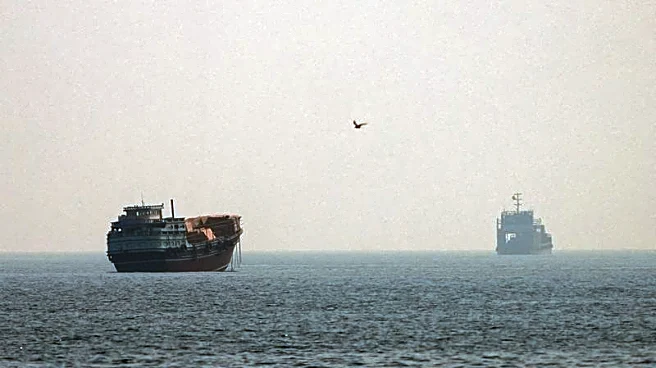
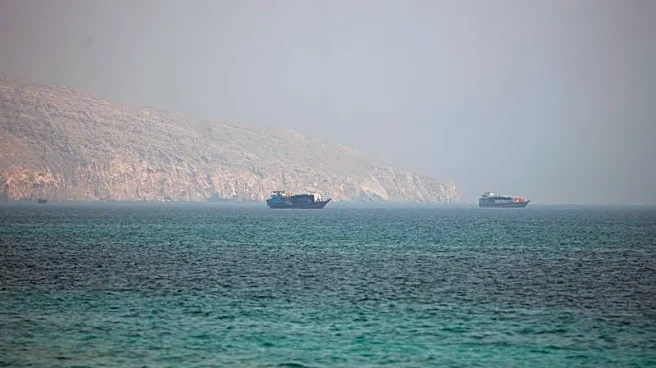
Oil prices have reached their highest level in a month due to renewed hostilities between the United States and Iran. The conflict has disrupted the Strait of Hormuz, a critical passage for global oil shipments. Brent crude, a key international benchmark,
rose by 3.8 percent, continuing a significant increase from the previous day. The tensions follow a brief period of peace after a memorandum of understanding was signed between Washington and Tehran. However, recent US military strikes on Iran and retaliatory actions by Iran have reignited fears of supply disruptions. The US Central Command has targeted Iran's capabilities to attack commercial shipping, while Iran has responded by hitting oil supertankers and US military assets in the region. President Trump announced the reimposition of a blockade on Iranian ports and plans to charge transit fees for vessels passing through the Strait of Hormuz.
Why It's Important?
The escalation in US-Iran tensions has significant implications for global oil markets and economic stability. The Strait of Hormuz is a vital chokepoint for oil transportation, and disruptions can lead to increased oil prices worldwide. The rise in oil prices affects various stakeholders, including consumers facing higher fuel costs and industries reliant on oil. The situation also impacts geopolitical relations, as countries dependent on oil imports may need to adjust their strategies. The US administration's actions to ensure the strait remains open highlight the strategic importance of maintaining oil flow to prevent further economic disruptions. The potential for oil prices to reach $100 per barrel could have widespread economic consequences, affecting inflation rates and economic growth.
What's Next?
The ongoing conflict suggests that oil prices may continue to rise if the situation does not stabilize. The US government is likely to maintain its military presence in the region to secure oil shipments, while diplomatic efforts may be pursued to de-escalate tensions. The international community will be closely monitoring the situation, as prolonged disruptions could lead to broader economic impacts. Oil market analysts predict that without a resolution, the market may face further volatility, and countries may need to explore alternative energy sources or increase strategic reserves to mitigate risks.