
What's Happening?
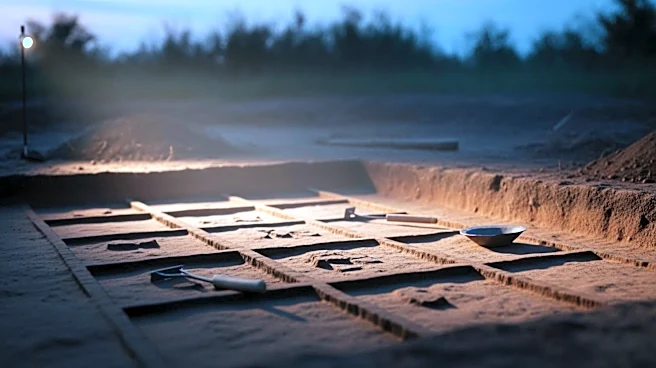
The third phase of excavations at the Chemmani mass grave site in northern Sri Lanka has led to the discovery of 339 skeletal assemblages, with 318 fully recovered. However, misleading images have been
circulating on social media, falsely claiming to depict these findings. Fact-checking efforts have revealed that some of these images are unrelated to the Chemmani site, including a photograph from a 17th-century mass grave in Nuremberg, Germany. The Chemmani excavations, supervised by Jaffna Magistrate’s Court Judge S. Leninkumar, are being conducted with modern scientific methods, and the spread of false images has been criticized for causing public confusion and misrepresenting the forensic process.
Why It's Important?
The Chemmani mass grave site holds significant historical and human rights importance for Sri Lanka's Tamil community. The spread of misleading images undermines the integrity of the excavation process and can exploit public emotions for social media engagement. Accurate reporting and reliance on verified sources are crucial to maintaining the credibility of the findings and respecting the sensitivities involved. The situation highlights the broader issue of misinformation in sensitive historical and human rights contexts, emphasizing the need for responsible media consumption and dissemination.
What's Next?
The excavation process at Chemmani is ongoing, with further discoveries expected as the third phase continues. Legal and forensic teams are expected to provide updates as new findings emerge. The public is urged to rely on official announcements from the Jaffna Magistrate’s Court and forensic experts for accurate information. Efforts to combat misinformation will likely continue, with fact-checking organizations playing a key role in verifying claims and images related to the site.
Beyond the Headlines
The Chemmani excavations are not only a matter of historical record but also a reflection of ongoing ethnic and political tensions in Sri Lanka. The spread of misinformation can exacerbate these tensions, highlighting the ethical responsibility of media outlets and social media users to verify information before sharing. The case underscores the importance of transparency and accountability in forensic investigations, particularly in regions with complex socio-political histories.