








What's Happening?
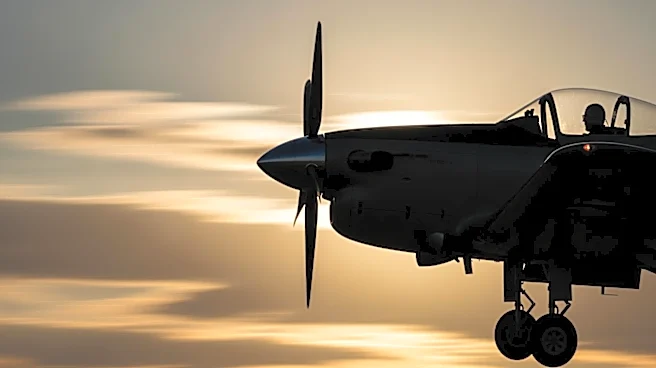
The U.S. Air Force Special Operations Command (AFSOC) has announced a new rapid deployment capability for the OA-1K Skyraider II, a close air support turboprop aircraft. This development was revealed at the Special Operations Forces Week conference in
Tampa, Florida. The OA-1K, developed by L3Harris, can now be partially disassembled, loaded into transport aircraft like the Boeing C-17 and Lockheed Martin C-5, and reassembled at the destination. This capability allows the aircraft to be quickly configured into operational condition, enhancing its deployment flexibility. The OA-1K is based on the Air Tractor AT-802 commercial crop-dusting turboprop and has been modified to carry precision weapons, sensors, and military communications. Despite its utility in low-intensity special operations, the OA-1K has faced criticism for its vulnerability to modern air defenses. The program, initially set for 75 aircraft, has been reduced to 53 in recent budget projections, though AFSOC leadership continues to advocate for the full contingent.
Why It's Important?
The introduction of a rapid deployment capability for the OA-1K Skyraider II represents a significant enhancement in the U.S. military's ability to provide close air support in remote and austere environments. This capability is crucial for special operations forces that require flexible and responsive air support. The OA-1K's ability to be quickly deployed and reassembled allows for rapid response to emerging threats and operational needs. However, the aircraft's vulnerability to advanced air defenses raises concerns about its survivability in high-threat environments. The reduction in the number of aircraft procured could impact the overall effectiveness and availability of this capability. The decision to cut the program must be approved by Congress, highlighting the ongoing debate over defense spending priorities and the balance between cost and capability.
What's Next?
The future of the OA-1K program will depend on congressional approval of the defense budget, which will determine the final number of aircraft procured. AFSOC leadership is likely to continue advocating for the full contingent of 75 aircraft, emphasizing the OA-1K's versatility and cost-effectiveness. The ongoing development of tactics and procedures for the OA-1K at Will Rogers Air National Guard Base will be crucial in demonstrating the aircraft's operational value. Additionally, the U.S. military may explore further modifications to enhance the OA-1K's survivability against modern threats, potentially influencing future procurement decisions.