







What's Happening?
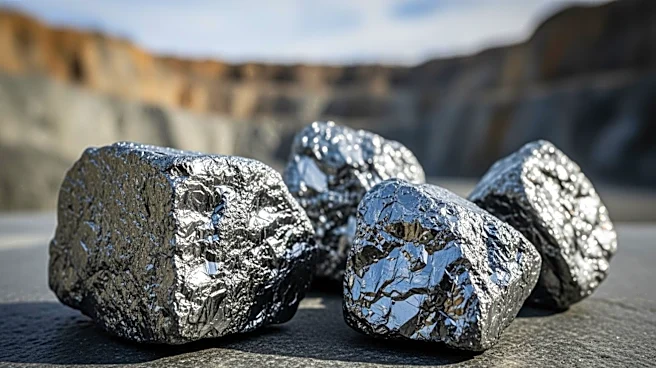
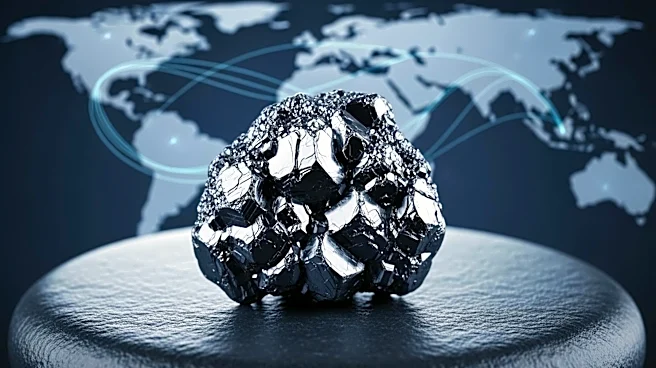
Germany is actively exploring Madagascar's graphite industry as part of a broader effort to reduce Europe's reliance on China for critical minerals used in electric vehicle batteries and clean energy technologies. German government geoscientists recently
visited the Molo graphite mine in Madagascar, operated by Canadian mining company NextSource Materials, to assess the potential of the site as a reliable source of natural graphite and anode materials. This initiative is part of a larger strategy by Western governments to diversify supply chains amid geopolitical tensions. The study, supported by Madagascar's Ministry of Mines, aims to determine if Madagascar can meet the industrial needs of Germany and the broader European battery market.
Why It's Important?
The move by Germany underscores a significant shift in industrial policy across Europe, driven by the need for secure access to battery minerals essential for the transition to electric vehicles. As the European Union classifies graphite as a critical raw material, Germany's efforts to secure alternative sources are crucial for its automotive industry, which includes major carmakers like Volkswagen, BMW, and Mercedes-Benz. The initiative also aligns with broader European financing efforts, such as a €1 billion raw materials fund managed by Germany's state development bank KfW. By turning to Madagascar, Europe aims to mitigate risks associated with over-reliance on China, which currently dominates global graphite mining and processing.
What's Next?
The findings from the German study on Madagascar's graphite potential are expected to be submitted to Germany's Federal Ministry for Economic Cooperation and Development. If successful, this could lead to increased investment in Madagascar's mining sector and potentially boost the country's role in the global graphite market. Additionally, other African countries like Tanzania are also expanding their graphite production, which could further diversify global supply chains. The outcome of these efforts may influence future trade policies and industrial strategies within Europe, as well as impact the global market dynamics for battery minerals.