






What's Happening?
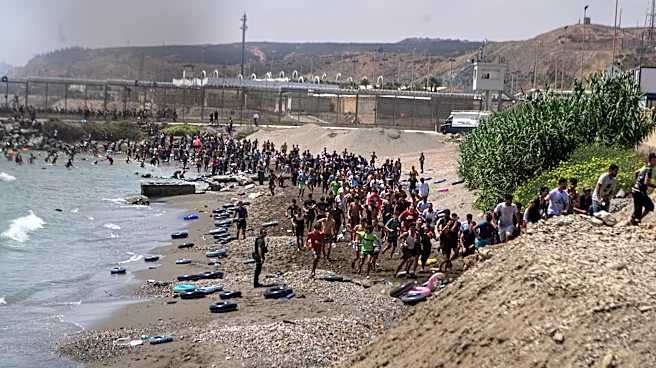
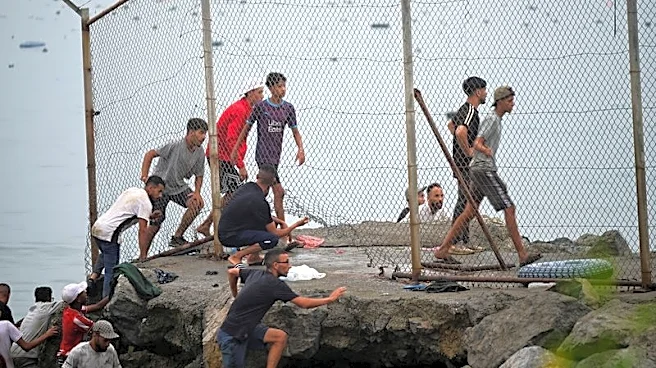
A significant surge of migrants from Morocco into the Spanish territory of Ceuta has created a humanitarian crisis. Tens of thousands of Moroccans attempted to cross into Ceuta, driven by hopes of reaching Europe for better opportunities. The influx,
which saw around 60,000 people crossing in a short span, overwhelmed the small territory, leading to chaos and a call for order by local authorities. Many migrants, like Abdulah Buji, were motivated by the prospect of a better future in Europe, but faced immediate challenges upon arrival, including potential expulsion and legal limbo. The situation in Ceuta mirrors a similar, albeit smaller, crisis in 2021, highlighting ongoing tensions and the desperate conditions faced by many in Morocco.
Why It's Important?
The crisis in Ceuta underscores the broader challenges of migration management at European borders. The massive influx of migrants not only strains local resources but also raises questions about the effectiveness of border controls and the humanitarian responsibilities of European nations. The situation highlights the desperation of many Moroccans who see migration as their only viable option for a better life, reflecting broader socio-economic issues in the region. The response from Spanish authorities and the European Union could set precedents for future migration policies and humanitarian responses, impacting both local populations and international relations.
What's Next?
In the wake of the crisis, Spanish authorities are likely to increase border security and seek assistance from the European Union to manage the situation. There may be diplomatic discussions between Spain and Morocco to address the root causes of migration and improve border cooperation. Humanitarian organizations could also play a role in providing aid and support to those affected. The situation may prompt broader discussions within the EU about migration policies and the need for a coordinated response to similar crises in the future.
Beyond the Headlines
The events in Ceuta may have long-term implications for migration patterns in the region. The crisis highlights the need for sustainable economic development in Morocco and other North African countries to address the root causes of migration. Additionally, the situation raises ethical questions about the treatment of migrants and the responsibilities of wealthier nations to provide refuge and support. The crisis could also influence public opinion and political discourse on migration in Europe, potentially affecting future policy decisions.