
What's Happening?
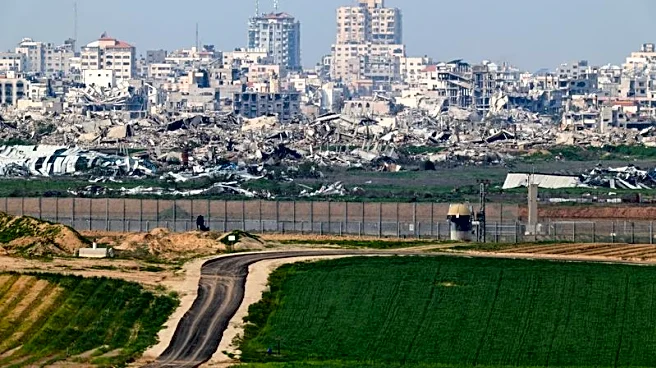
Egypt has proposed the formation of a technocratic body to oversee the administration of the Gaza Strip, following months of discussions with Palestinian factions. The proposal includes a list of approximately
80 candidates, comprising professionals such as economists, doctors, and engineers, who are not affiliated with any political faction or armed group. This initiative aims to manage daily life in Gaza, focusing on areas like healthcare, education, and infrastructure, without engaging in political activities or armed conflict. The proposal requires Israel's approval, and discussions are ongoing regarding security arrangements and the handling of weapons in Gaza. The technocratic body is part of a broader agreement's second phase, which involves international stabilization forces and potential negotiations with Hamas over disarmament.
Why It's Important?
The establishment of a technocratic body in Gaza is significant as it represents a potential shift in governance, aiming to depoliticize the administration and focus on civilian needs. This move could lead to improved living conditions in Gaza by ensuring that essential services are managed by professionals rather than political entities. However, the success of this initiative hinges on the cooperation of key stakeholders, including Israel and Hamas. The proposal also highlights the complex geopolitical dynamics in the region, involving multiple international actors such as the U.S., Qatar, and Egypt. The outcome of these discussions could influence regional stability and the broader Middle East peace process.
What's Next?
The next steps involve securing Israel's approval for the technocratic body and addressing outstanding security concerns, particularly regarding Hamas's weapons. International discussions, potentially involving direct talks between the U.S. administration and Hamas, are expected to continue. The involvement of international stabilization forces is also anticipated to ensure security in Gaza. The final composition of the technocratic body will be determined once these issues are resolved. The outcome of these negotiations could set a precedent for future governance models in conflict zones, emphasizing the role of neutral, professional administration in achieving peace and stability.