









What's Happening?
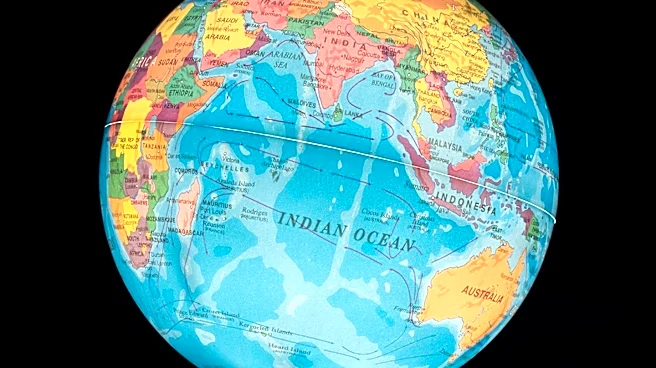
Australia and Fiji have entered into a significant mutual defense agreement known as the Ocean of Peace Alliance, or the Veitacini Treaty. This marks Fiji's first military alliance as an independent nation and is Australia's fourth, following alliances
with the United States, New Zealand, and Papua New Guinea. The treaty commits both nations to assist each other in times of need and to consult on security developments that may threaten their sovereignty. This agreement is part of a broader strategy by Australia to strengthen its regional ties through a series of treaties, including economic and climate initiatives, to counterbalance China's growing influence in the Pacific.
Why It's Important?
The treaty represents a strategic shift in the Pacific region, highlighting the increasing geopolitical competition between Western nations and China. For Australia, this alliance is a step towards securing its regional influence and countering potential Chinese military expansion. The inclusion of economic and climate components in the agreement underscores the importance of comprehensive partnerships that address both security and developmental needs. This move could potentially stabilize the region by fostering stronger ties among Pacific nations, but it also risks escalating tensions with China, which has been expanding its own influence in the area.
What's Next?
The alliance may expand to include other Pacific nations, potentially forming a Melanesian security bloc anchored to Australia. However, this could challenge the consensus-driven approach of the Pacific Islands Forum, risking division within the region. The success of this alliance will depend on Australia's ability to deliver on its economic and climate promises, as well as its diplomatic handling of China's response. The region will be closely watching how these dynamics unfold, particularly in light of China's recent military activities in the Pacific.
Beyond the Headlines
The treaty reflects a broader trend of Pacific nations leveraging their strategic positions to gain economic and security benefits from competing global powers. Fiji's proactive role in proposing the alliance indicates a shift towards greater agency among Pacific nations, seeking to balance relationships with both Western and Chinese interests. This development could lead to a more multipolar Pacific region, where smaller nations play a significant role in shaping regional security and economic policies.