


What's Happening?
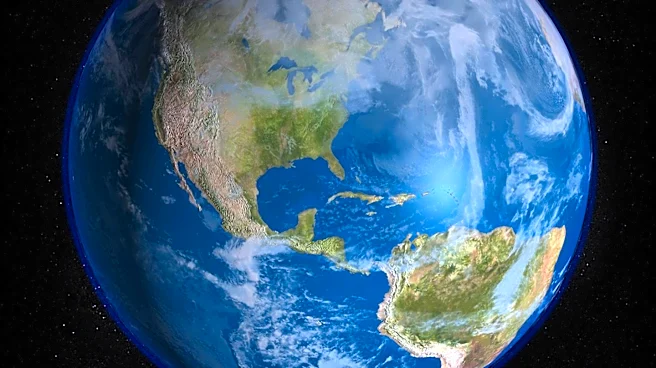
The September equinox is scheduled to occur on September 22 or 23, 2026, depending on the specific time zone. This astronomical event signifies the official beginning of fall in the Northern Hemisphere and spring in the Southern Hemisphere. The equinox happens
at the precise moment the sun crosses Earth's equator, moving from north to south. For residents in the U.S., the equinox is expected on September 22, while those in Europe, Africa, and Asia will experience it on September 23. During an equinox, Earth's axis is not tilted towards or away from the sun, resulting in approximately equal amounts of daylight and nighttime across both hemispheres. This celestial alignment is a key marker in the annual cycle of seasons.
Why It's Important?
The September equinox holds significance beyond its astronomical definition, influencing various aspects of daily life and cultural practices in the U.S. and globally. Agriculturally, it traditionally marks the harvest season, impacting farming communities and food production cycles. The shift to fall often brings changes in weather patterns, which can affect industries such as tourism, retail (with seasonal product changes), and energy consumption as temperatures drop. For many, it symbolizes a period of transition, leading to cultural celebrations and observances tied to the changing seasons. Understanding the equinox helps in planning for seasonal adjustments in various sectors, from outdoor activities to business operations that are sensitive to weather and daylight hours.
What's Next?
Following the September equinox, the Northern Hemisphere will officially enter the fall season, leading to progressively shorter days and longer nights until the winter solstice. This transition will bring cooler temperatures, and in many regions, the vibrant display of fall foliage. Businesses will continue to adapt to seasonal demands, with retailers preparing for holiday shopping and energy companies anticipating increased heating needs. The equinox also sets the stage for other celestial events in September, including Neptune reaching opposition on September 25-26 and the full Harvest Moon on September 26, which will offer unique skywatching opportunities for the public. These events collectively contribute to the seasonal rhythm and natural phenomena observed throughout the year.
Beyond the Headlines
The September equinox, while a predictable astronomical event, subtly influences human behavior and societal rhythms. The decreasing daylight hours can impact mood and energy levels, a phenomenon sometimes referred to as seasonal affective disorder. Culturally, the equinox has been a point of reference for millennia, inspiring various traditions and festivals across different civilizations that celebrate harvest and the balance between light and dark. Environmentally, the changing seasons triggered by the equinox play a crucial role in the life cycles of plants and animals, affecting migration patterns, hibernation, and plant growth. This annual celestial event underscores the deep connection between human existence and the natural world, reminding us of the Earth's continuous journey around the sun.