


What's Happening?
Vietnam and Brazil are strengthening their cooperation in the field of smart agriculture, focusing on digital technologies and sustainable value chains. This development was highlighted during a recent hybrid seminar organized by the Vietnamese Embassy
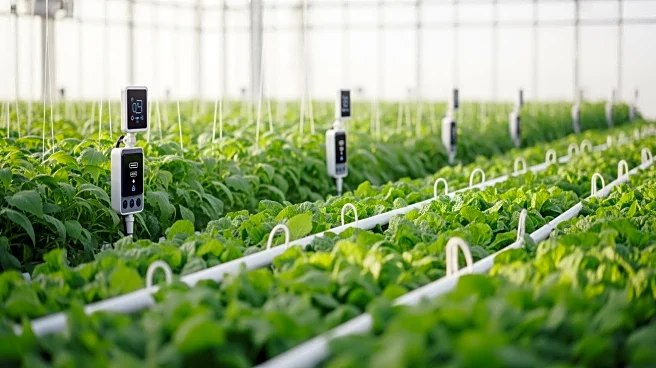
in Brazil, which included over 50 participants from government, research, and industry sectors of both countries. Vietnam's Ambassador to Brazil, Bui Van Nghi, emphasized Vietnam's robust economic growth, with a GDP expected to surpass $510 billion and agricultural exports nearing $70 billion. The ambassador attributed this success to digital agriculture solutions like drones, smart sensors, and blockchain-based traceability, which have enhanced productivity and reduced costs. The bilateral relationship between Vietnam and Brazil was elevated to a strategic partnership in November 2024, with current trade valued at approximately $8 billion and a target of $15 billion by 2030. Brazilian officials expressed their willingness to share advanced technologies in artificial intelligence, agricultural sensors, and precision farming, aiming to strengthen collaboration with Vietnam's Agricultural Research Corporation (Embrapa).
Why It's Important?
The collaboration between Vietnam and Brazil in smart agriculture is significant as it addresses global challenges such as climate change, resource constraints, and food safety standards. By leveraging digital technologies, both countries aim to enhance agricultural productivity and sustainability, which is crucial for meeting the growing global demand for food. This partnership not only strengthens economic ties between the two nations but also sets a precedent for international cooperation in sustainable agriculture. The focus on smart agriculture could lead to innovations that benefit other countries facing similar challenges, potentially transforming global agricultural practices. The strategic partnership and technology transfer between Vietnam and Brazil could also stimulate economic growth, create jobs, and improve food security in both countries.
What's Next?
Moving forward, Vietnam and Brazil are expected to implement joint projects that capitalize on their complementary strengths in agriculture. These projects may include cooperation in rice cultivation, agricultural processing, and the development of medicinal plants. Strengthening the partnership between Brazil's Embrapa and Vietnamese counterparts will be crucial for effective technology transfer and innovation. As both countries aim to increase their bilateral trade to $15 billion by 2030, further initiatives in smart agriculture and sustainable value chains are likely to be prioritized. The success of this collaboration could encourage other nations to adopt similar strategies, fostering a global shift towards more sustainable agricultural practices.