




What's Happening?
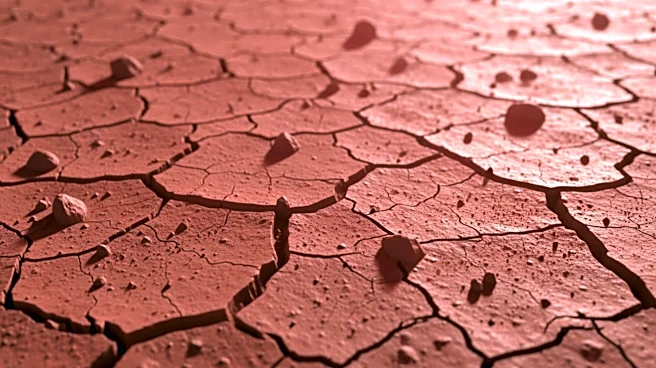
NASA's Curiosity rover is currently investigating a polygonal sulfate unit on Mars after leaving the boxwork terrain. The rover captured images using its Mast Camera, revealing interesting textures and polygons in the terrain. The team, led by Susanne
P. Schwenzer, faced challenges when data did not arrive on time, prompting creative planning. The rover utilized its AEGIS capability to autonomously select targets for ChemCam LIBS measurements. The team conducted atmospheric and environmental observations, including dust-devil movies. The rover's activities included ChemCam and APXS observations to understand the chemistry and formation of the polygons, providing insights into the environmental conditions at the time of their formation.
Why It's Important?
The exploration of Mars by the Curiosity rover is crucial for understanding the planet's geological history and environmental conditions. The investigation of polygonal terrains can reveal information about past water activity and climate on Mars, which is essential for future missions and potential human exploration. The data collected by Curiosity contributes to the broader scientific goals of NASA's Mars Science Laboratory mission, enhancing our knowledge of Mars and its potential to support life. The rover's ability to autonomously select targets and conduct scientific experiments demonstrates advancements in robotic exploration technology.
What's Next?
Curiosity will continue its traverse up Mount Sharp, exploring new terrains and conducting scientific experiments. The rover's ongoing mission aims to gather more data on Mars' geology and climate, contributing to future exploration plans. The team will analyze the collected data to understand the formation of the polygonal terrains and their implications for Mars' history. As the rover progresses, it will encounter new challenges and opportunities for scientific discovery, furthering our understanding of the Red Planet.