

What's Happening?
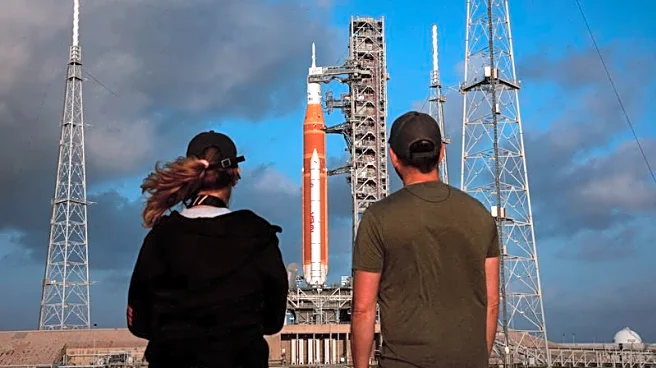
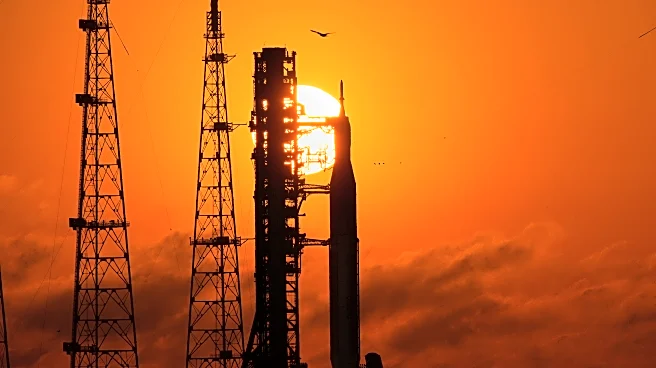
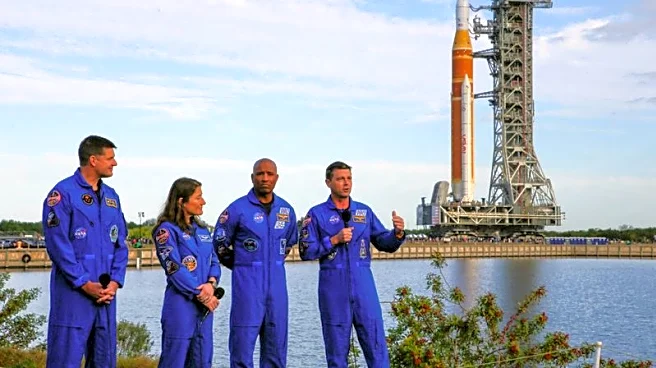
NASA is set to begin the countdown for the Artemis II mission, marking the first human spaceflight beyond Earth's orbit in over 53 years. The launch is scheduled between 6:24-8:24 p.m. EDT on April 1 from Kennedy Space Center. The mission will utilize
the Space Launch System (SLS) rocket and Orion spacecraft, aiming to establish a sustained human presence on the Moon and eventually facilitate astronaut missions to Mars. The Artemis II mission will test the Orion spacecraft's systems with a crew on board, targeting a trajectory that will break the distance record for human spaceflight set by Apollo 13. The mission is expected to last over nine days, with a splashdown planned off the coast of San Diego.
Why It's Important?
The Artemis II mission represents a significant step in NASA's long-term goal of deep space exploration. By testing the Orion spacecraft's capabilities with a human crew, NASA aims to ensure the safety and reliability of future missions to the Moon and Mars. This mission is crucial for advancing U.S. leadership in space exploration and fostering international partnerships. The success of Artemis II could pave the way for more ambitious projects, potentially leading to technological advancements and economic opportunities in the aerospace sector. It also holds symbolic importance, inspiring a new generation to view the Moon as a reachable destination.
What's Next?
If the Artemis II mission is successful, it will set the stage for subsequent missions aimed at establishing a permanent human presence on the Moon. NASA has launch opportunities through April 6, with a backup window opening on April 30 if needed. The mission's outcome will influence future planning and development of technologies necessary for deep space exploration. Stakeholders, including international space agencies and private aerospace companies, will closely monitor the mission's progress, as it could impact collaborative efforts and investments in space exploration.