
What's Happening?
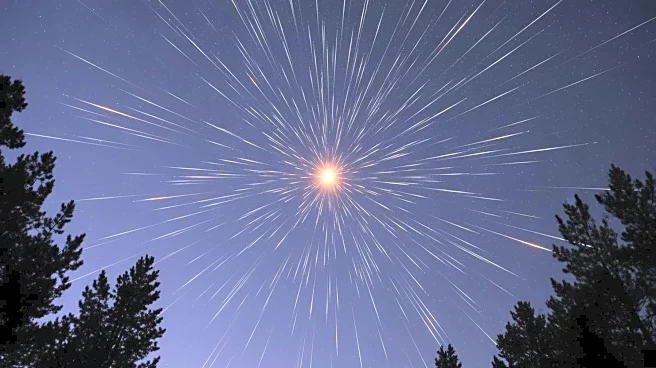
The Geminid meteor shower is set to peak overnight on December 13-14, 2025, providing a stunning display of shooting stars as Earth passes through the debris trail of comet 3200 Phaethon. According to the American
Meteor Society, up to 150 meteors per hour may be visible under ideal conditions. The meteors, which appear to originate from the constellation Gemini, can be seen as soon as darkness falls, with the best viewing opportunities occurring after 10 p.m. local time. The shower is known for its bright, colorful meteors, which can include larger fragments that create 'fireballs' brighter than Venus.
Why It's Important?
The Geminid meteor shower is one of the most reliable and spectacular meteor showers of the year, attracting both amateur and professional astronomers. Its visibility across the Northern Hemisphere makes it accessible to a wide audience, providing an opportunity for public engagement with astronomy. The event also highlights the ongoing interest in celestial phenomena and the importance of preserving dark skies for astronomical observations. The shower's occurrence during a period of minimal moonlight enhances its visibility, making it a significant event for skywatchers.
What's Next?
As the Geminid meteor shower peaks, enthusiasts are encouraged to find locations with minimal light pollution to maximize their viewing experience. The shower will continue to be visible in the days following the peak, though at reduced rates. Observers are advised to allow their eyes to adjust to the dark and to use red lights to preserve night vision. The event may also inspire educational activities and discussions about astronomy and space science.