




What's Happening?
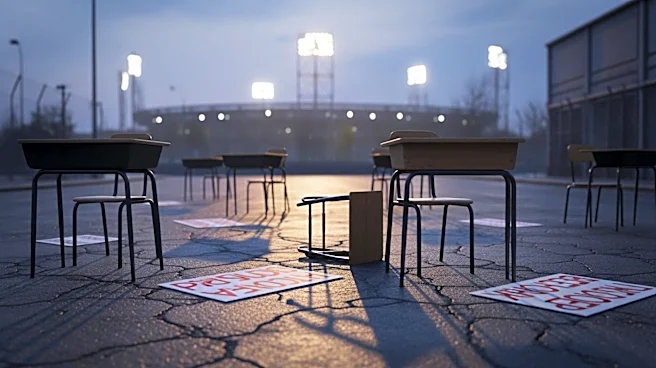
In Mexico City, protests have emerged ahead of the 2026 World Cup opener, with various groups voicing grievances over social and economic issues. Teachers, relatives of missing persons, and other activists have taken to the streets, arguing that funds
spent on the World Cup should address pressing social needs. The protests have been marked by creative expressions and have resulted in clashes with police, leading to injuries among demonstrators.
Why It's Important?
The protests highlight the tension between large-scale international events and local social issues. The allocation of resources for the World Cup has sparked debate over government priorities, with many arguing that social welfare should take precedence. The situation underscores the broader challenges faced by countries hosting major events, where the spotlight on global sports can amplify domestic issues. The protests also reflect a growing demand for accountability and transparency in government spending.
What's Next?
As the World Cup progresses, the Mexican government may face increased pressure to address the protesters' demands. Dialogue between government officials and protest leaders could be crucial in finding a resolution. The international community may also scrutinize Mexico's handling of the protests, potentially influencing future decisions on hosting global events. The outcome of these protests could impact Mexico's political landscape and its approach to addressing social issues.
Beyond the Headlines
The protests in Mexico City may have long-term implications for civic engagement and activism in the country. The use of the World Cup as a platform for raising awareness about social issues could inspire similar movements in other contexts. Additionally, the protests may lead to a reevaluation of how international events are planned and executed, with greater consideration for local communities and their needs.