






What's Happening?
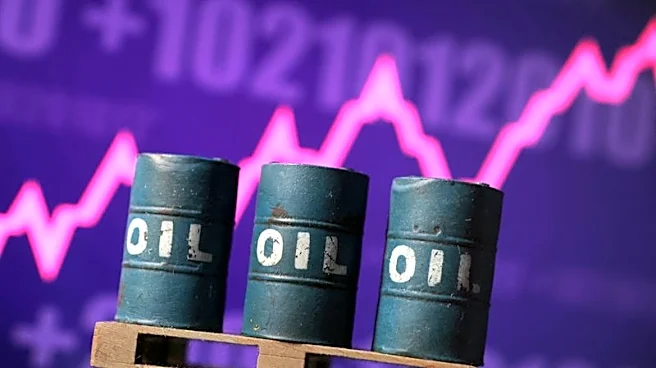
Oil prices have surged by over 2% following the stalling of peace talks between the United States and Iran. The breakdown in negotiations has exacerbated tensions, leading to limited shipments through the Strait of Hormuz, a critical chokepoint for global
oil supplies. The stalled talks come after President Trump canceled a planned diplomatic mission to Pakistan, leaving Iranian officials questioning the reliability of US intentions. The geopolitical uncertainty has led to increased oil prices, with Brent crude reaching $107.49 per barrel and US West Texas Intermediate at $96.17 per barrel.
Why It's Important?
The stalling of US-Iran peace talks and the resulting rise in oil prices have significant implications for the global economy. Higher oil prices can lead to increased costs for consumers and businesses, potentially slowing economic growth. The situation highlights the fragility of global energy markets and the impact of geopolitical tensions on supply chains. For the US, the increased oil prices could benefit domestic producers but also strain international relations and economic stability. The situation underscores the need for diversified energy sources and strategies to mitigate the impact of such disruptions.
What's Next?
The future of oil prices and global energy stability will depend on the resumption of US-Iran negotiations and the resolution of shipping constraints in the Strait of Hormuz. If talks remain stalled, oil prices could continue to rise, prompting further economic repercussions. Major stakeholders, including governments and energy companies, will need to monitor the situation closely and prepare for potential supply chain adjustments. The geopolitical landscape will require careful navigation to avoid further escalation and ensure energy security.