
What's Happening?
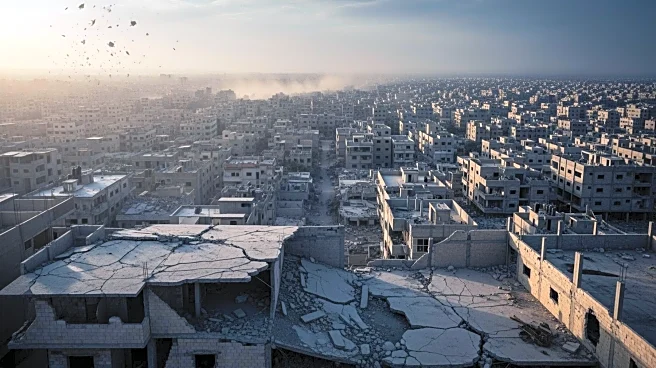
In Aleppo, Syria, intense clashes erupted between government forces and the Kurdish-led Syrian Democratic Forces (SDF), resulting in significant casualties and displacement. The conflict, which began on Tuesday,
has led to the deaths of at least 23 individuals and the displacement of over 140,000 people. The fighting occurred in predominantly Kurdish neighborhoods, including Sheikh Maqsoud, Achrafieh, and Bani Zaid, following a failure to integrate the SDF into Syria's national army. The SDF, backed by the U.S., has been a key player in combating the Islamic State in eastern Syria. The clashes have seen the use of shelling and drone strikes, with the government accusing the SDF of using civilian facilities for military purposes. The situation has calmed, with first responders entering the area to provide aid and disarm mines left by Kurdish forces.
Why It's Important?
The conflict in Aleppo highlights the ongoing instability in Syria, despite the fall of President Bashar Assad in 2024. The clashes underscore the challenges in integrating various armed groups into a unified national army, a critical step for Syria's long-term stability. The displacement of thousands adds to the humanitarian crisis in the region, straining resources and complicating international aid efforts. The involvement of the U.S.-backed SDF also reflects broader geopolitical tensions, as the group has been a significant force against ISIS, complicating Syria's internal dynamics and international relations.
What's Next?
The immediate focus is on stabilizing the affected neighborhoods and ensuring the safe return of displaced residents. The Syrian government and the SDF may need to engage in negotiations to prevent further clashes and work towards a sustainable integration of forces. International organizations, including the United Nations, are likely to increase their humanitarian efforts to support displaced populations. The situation remains volatile, with potential for further conflict if a political solution is not reached.