

What's Happening?
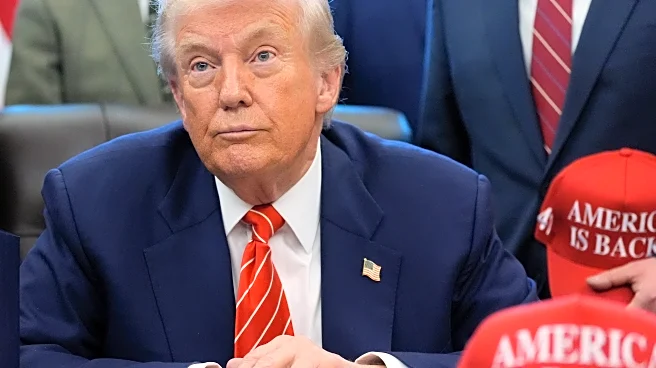
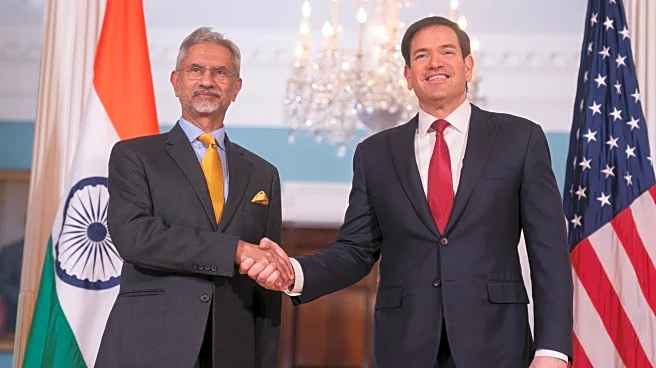
The Trump administration is set to engage in critical discussions with officials from Greenland and Denmark at the White House. The talks, involving U.S. Vice President JD Vance and Secretary of State Marco Rubio, come amid President Trump's persistent
efforts to bring Greenland under U.S. control. Greenland's Foreign Minister Vivian Motzfeldt and Denmark's Foreign Minister Lars Lokke Rasmussen are expected to represent their respective territories. This meeting follows a joint press conference in Copenhagen where Greenland's Prime Minister Jens-Frederik Nielsen and Denmark's Prime Minister Mette Frederiksen expressed their opposition to Trump's takeover ambitions. The U.S. President has emphasized Greenland's strategic importance for national security, a stance that has raised concerns in Denmark about potential NATO implications.
Why It's Important?
The outcome of these talks could significantly impact U.S.-European relations, particularly within NATO. President Trump's aggressive stance on acquiring Greenland has alarmed Denmark, which is responsible for Greenland's defense. The situation poses a threat to NATO's cohesion, as highlighted by Ian Lesser from the German Marshall Fund. The talks may explore new defense commitments and U.S. access to Greenland's resources, but failure to reach an agreement could lead to a diplomatic fallout. This scenario recalls previous contentious meetings involving President Trump, suggesting potential for further strain on international alliances.
What's Next?
The meeting is expected to clarify the potential for a negotiated settlement regarding Greenland. However, there is skepticism about reaching a diplomatic solution, as noted by Carl Bildt, former Prime Minister of Sweden. The involvement of Vice President JD Vance, known for his hardline stance, suggests a challenging negotiation process. The talks may initiate further discussions, but the possibility of a complete breakdown in U.S.-Danish relations remains if no resolution is found.
Beyond the Headlines
The situation underscores broader geopolitical dynamics, with Greenland's strategic location and resources at the center of U.S. interests. The diplomatic crisis highlights the complexities of balancing national security concerns with international alliances. The potential for increased U.S. military presence in the Arctic region could have long-term implications for global power structures and environmental considerations.