



What's Happening?
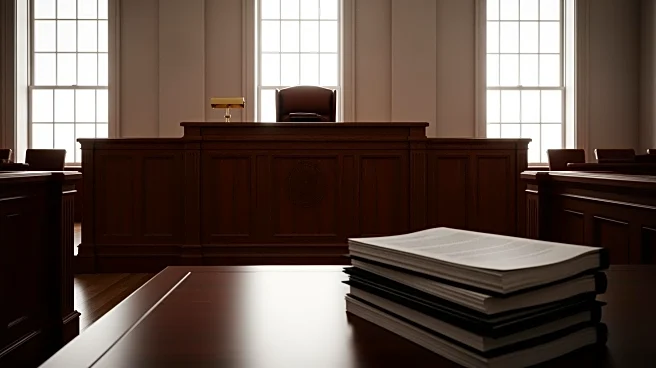
A federal judge has ordered Lindsey Halligan, a former personal lawyer for President Trump, to explain why she continues to identify herself as the U.S. attorney in Virginia despite a previous ruling declaring her appointment unconstitutional. U.S. District
Judge David Novak, appointed by President Trump, issued the order in Richmond, citing Virginia's Rules of Professional Conduct. Halligan was appointed as interim U.S. attorney for the Eastern District of Virginia in September. However, a ruling by U.S. District Judge Cameron McGowan Currie in November found her appointment illegal, as her predecessor had already served the maximum 120 days without Senate confirmation. Despite this, Halligan's name continues to appear on government filings. The Justice Department has appealed the ruling, but it remains in effect. Judge Novak has instructed the government to respond within seven days, signed by Halligan.
Why It's Important?
This development highlights ongoing tensions between the judiciary and the executive branch regarding appointments and the rule of law. The case underscores the importance of adhering to legal procedures in government appointments, which are designed to ensure checks and balances. The situation could impact the credibility of the Justice Department and its ability to prosecute cases effectively if the legitimacy of its representatives is in question. It also reflects broader political dynamics, as Halligan's appointment was part of President Trump's efforts to install loyalists in key positions. The outcome of this legal challenge could set a precedent for how similar cases are handled in the future, affecting the balance of power between the executive and judicial branches.
What's Next?
The government is required to file a response to Judge Novak's order, which could lead to further legal proceedings. If Halligan's continued identification as U.S. attorney is deemed inappropriate, it may result in her removal from the position and potentially affect ongoing cases she is involved in. The Justice Department's appeal of the ruling against her appointment will also proceed, which could either reinforce or overturn the current legal standing. The situation may prompt further scrutiny of other appointments made under similar circumstances, potentially leading to broader legal and political ramifications.