



What's Happening?
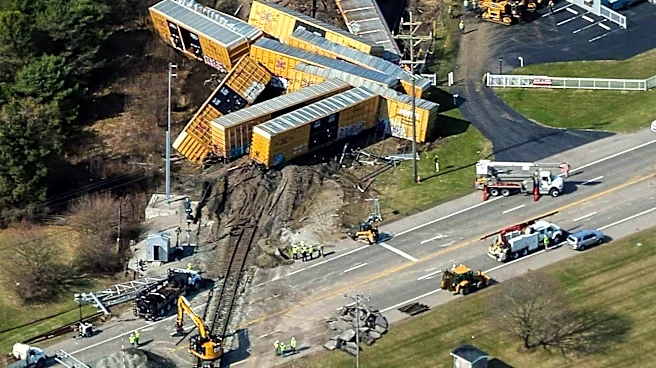
Sound Transit has experienced several service disruptions recently, including a train derailment on August 1 near the Chinatown International District station, which halted service for over two hours and caused 14 hours of overall disruption. Although
the derailed train was empty and no injuries occurred, the incident raised concerns among King County Councilmember Claudia Balducci, a Sound Transit Board member, regarding the cause and prevention of future occurrences. Sound Transit CEO Dow Constantine and Deputy CEO Ed Cobean explained that the derailment was due to two sheared bolts on a unique section of track leading to a pocket track, used for repositioning trains. The agency has since inspected and repaired the track, sent the bolts for metallurgy testing, and plans to inspect other similar track sections. Other disruptions included a roof hatch issue on July 9 and mechanical problems on July 10 and 20, along with a power outage on July 21.
Why It's Important?
The recent incidents, particularly the derailment, highlight critical infrastructure and operational challenges for Sound Transit, a major public transportation provider in the Seattle metropolitan area. While the agency asserts that overall service reliability is improving and the derailment was an isolated incident, public confidence in the system's safety and efficiency could be affected. The disruptions impact thousands of daily commuters and event-goers, as evidenced by the World Cup matches that saw record ridership. The need for increased maintenance windows, as proposed in the draft 2027 service plan, underscores the pressure on the system due to growing demand and aging infrastructure. Effective communication during outages, as noted by Councilmember Balducci, is crucial for rider experience and maintaining trust in public services.
What's Next?
Sound Transit is in the early stages of developing its 2027 service plan, which includes exploring additional time for maintenance by potentially shortening service spans at certain times. The agency is seeking public feedback on this proposal. The investigation into the sheared bolts from the August 1 derailment is ongoing, with metallurgy testing expected to provide insights into the cause. Sound Transit also plans to conduct additional inspections across its entire system for other switches. Furthermore, the agency is committed to improving its communication protocols during unexpected service disruptions, aiming to provide clearer and more immediate information to riders regarding delays, causes, and alternative transportation options like bus bridges.
Beyond the Headlines
The challenges faced by Sound Transit reflect broader issues in urban infrastructure development and maintenance across the U.S. As cities grow and public transit systems expand, balancing increased ridership demands with the need for robust maintenance and safety protocols becomes paramount. The discussion around expanding maintenance windows points to a potential trade-off between service availability and long-term system health. This situation also underscores the importance of public accountability and transparency from transit agencies, especially when incidents occur. The reliance on public feedback for service plan development indicates a shift towards more community-engaged decision-making, which could become a model for other urban transit systems grappling with similar growth and maintenance pressures.