






What's Happening?
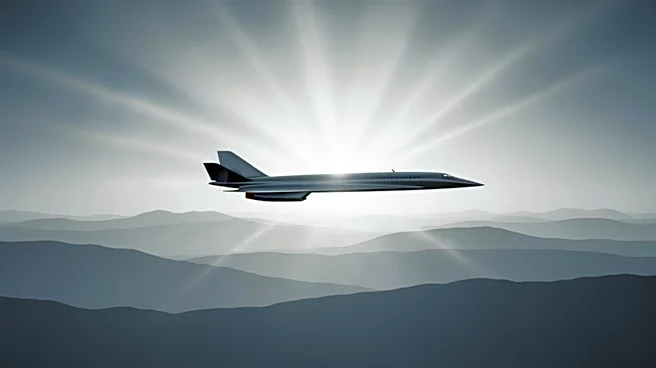
NASA's experimental X-59 aircraft successfully completed its first supersonic flight on June 5, 2026, reaching a speed of Mach 1.1. This milestone is part of NASA's Quesst mission, which aims to demonstrate quiet supersonic travel. The flight, piloted
by NASA test pilot Jim 'Clue' Less, took off from Edwards Air Force Base in California and lasted 81 minutes. The X-59 is designed to fly at supersonic speeds while minimizing the noise typically associated with sonic booms. The aircraft's development is a collaborative effort between NASA and Lockheed Martin Skunk Works, with the goal of enabling commercial supersonic flight over land. The next phase of testing will involve flights at Mach 1.4 to further assess the aircraft's capabilities.
Why It's Important?
The successful supersonic flight of the X-59 represents a significant advancement in aerospace technology, potentially revolutionizing air travel by reducing flight times without the disruptive noise of traditional supersonic aircraft. This development could lead to new noise standards for supersonic travel, facilitating the introduction of commercial supersonic flights over land. The data collected from these flights will be shared with regulators to help establish these standards, potentially opening new markets for the aerospace industry and enhancing the competitiveness of U.S. aerospace manufacturers.
What's Next?
In the coming days, the X-59 is expected to conduct its first 'mission conditions' flight, reaching speeds of Mach 1.4 and altitudes of 55,000 feet. These flights will gather data on the aircraft's noise profile, which will be crucial for developing new noise standards. NASA plans to fly the X-59 over several U.S. communities to assess public perception of its noise levels. The results will inform future regulations and support the development of quiet supersonic airliners.