

What's Happening?
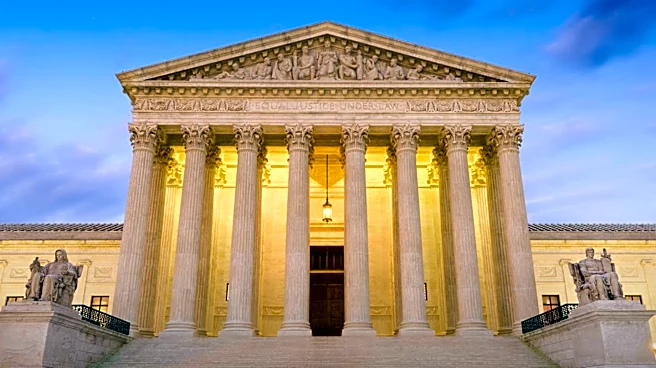
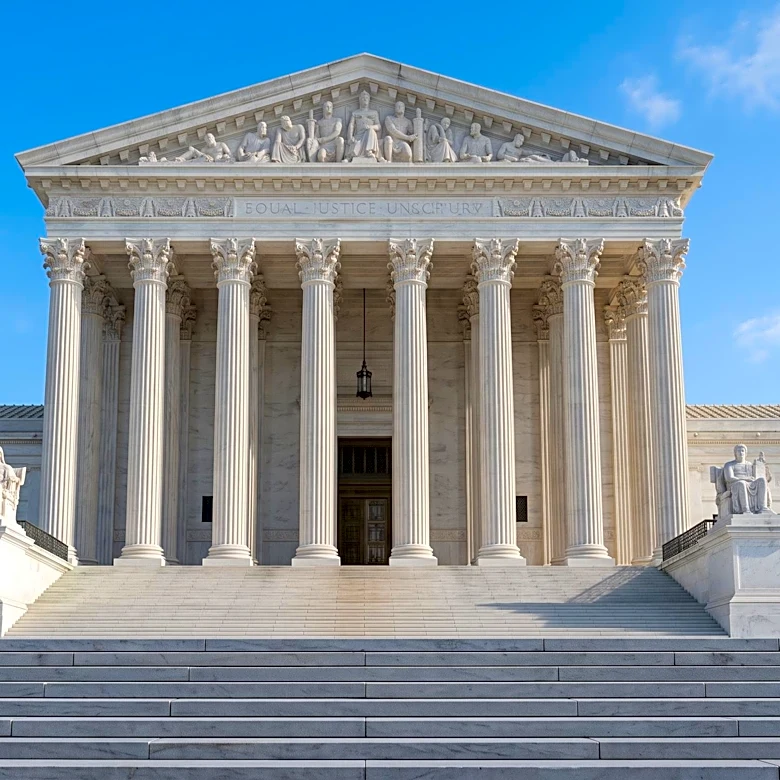
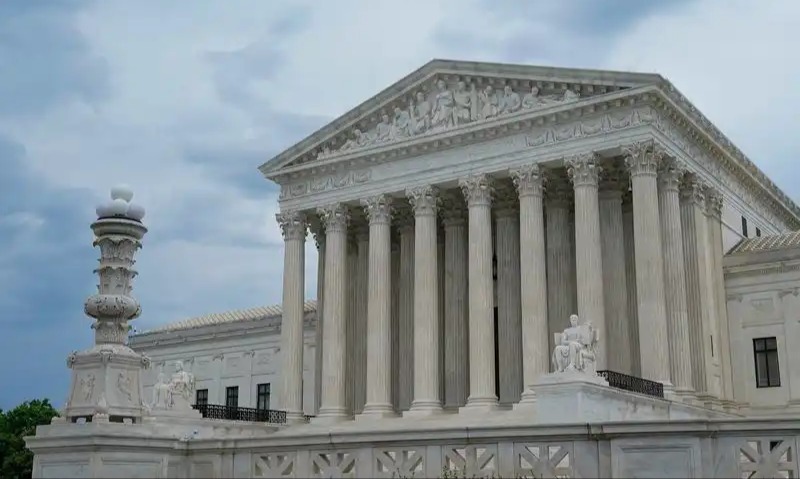
The U.S. Supreme Court has unanimously ruled that Missouri must use its 2022 congressional map for the upcoming 2026 election, effectively blocking a newer 2025 map favored by Republicans. This decision resolves weeks of legal disputes and conflicting
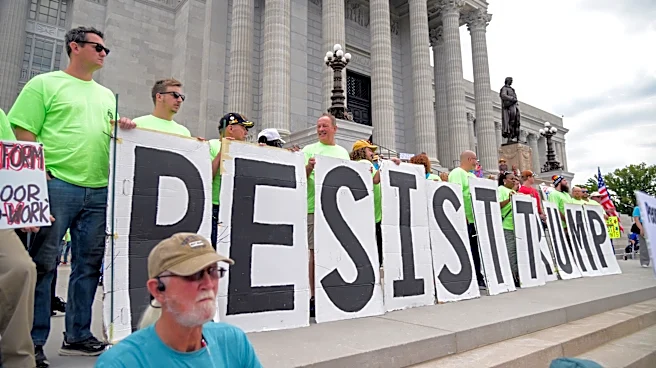
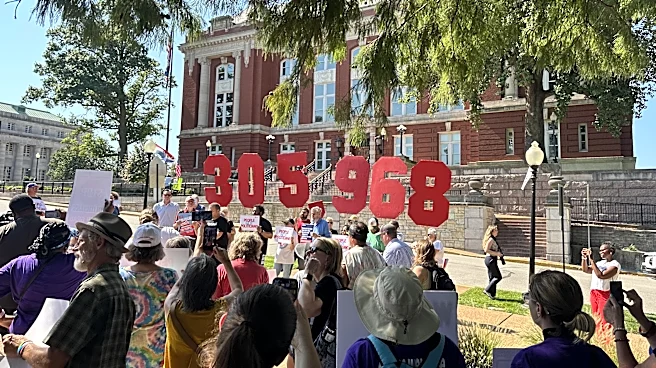
court orders regarding which district boundaries would be in effect. The Court emphasized that changing the map at this late stage would lead to 'electoral chaos,' especially since voting processes, including the mailing of ballots to military and overseas voters, have already commenced. This marks the third time the Supreme Court has intervened to reject the Republican-backed redistricting plan. The 2025 map, which was designed to potentially secure a seventh U.S. House seat for Republicans, had been challenged by groups like People Not Politicians. The ruling ensures that the same districts used in the 2022 and 2024 election cycles will remain in place for 2026.
Why It's Important?
This Supreme Court decision is significant for U.S. politics and election integrity, particularly concerning gerrymandering and the stability of electoral processes. By mandating the use of the 2022 map, the Court has prevented a last-minute alteration of district lines that could have significantly impacted the balance of power in Missouri's congressional delegation. The ruling underscores the judiciary's role in safeguarding against electoral disruptions, especially when voting is already underway. It also highlights the ongoing national debate over partisan redistricting, where states attempt to draw maps that favor one political party. The Court's emphasis on avoiding 'electoral chaos' sets a precedent against late-stage changes to election rules, reinforcing the principle that such alterations can disenfranchise voters and undermine public confidence in the electoral system. This outcome is a setback for Republicans who sought to gain an additional House seat through the 2025 map and a victory for groups advocating against gerrymandering.
What's Next?
Following the Supreme Court's ruling, Missouri election officials will continue with preparations for the 2026 election using the 2022 congressional map. This means that ballots already distributed to military and overseas voters, and those cast during early absentee voting, will remain valid. The decision brings an end to the immediate legal uncertainty surrounding Missouri's congressional districts for this election cycle. However, the broader issue of redistricting and potential future attempts to redraw maps in Missouri or other states will likely persist. Political parties and advocacy groups will continue to monitor and challenge redistricting efforts, particularly as the next decennial census approaches. The group People Not Politicians, which successfully challenged the 2025 map, will likely continue its efforts to promote fair redistricting practices. The ruling may also influence how other states approach redistricting challenges close to an election, potentially deterring last-minute changes.
Beyond the Headlines
The Supreme Court's intervention in Missouri's redistricting battle delves into the deeper implications of judicial oversight in electoral processes and the ongoing struggle against partisan gerrymandering. The unanimous decision, citing the need to prevent 'electoral chaos,' reflects a judicial reluctance to disrupt elections once they are in motion, a principle often referred to as the 'Purcell principle.' This case highlights the tension between state legislative power to draw district lines and the judiciary's role in ensuring fair and orderly elections. The repeated attempts by Missouri Republicans to implement a map designed to favor their party, and the consistent blocking of these efforts by the Supreme Court, underscore the persistent challenges to democratic representation posed by gerrymandering. The outcome reinforces the idea that while states have the authority to define their electoral maps, this authority is not absolute and can be checked by higher courts to protect the integrity of the voting process and prevent voter disenfranchisement.