







What's Happening?
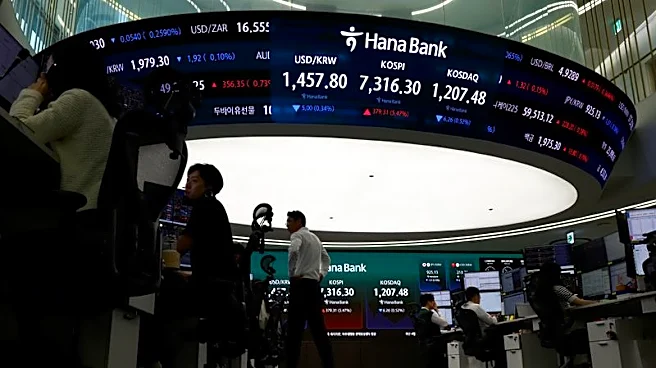
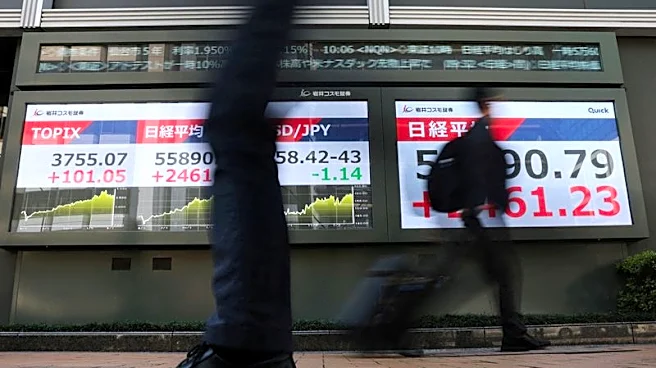
The Nikkei 225 index in Japan surged past 62,000 for the first time, marking a significant milestone as Asia-Pacific markets rallied despite heightened tensions in the Middle East. This rise was driven by gains in sectors such as basic materials, technology,
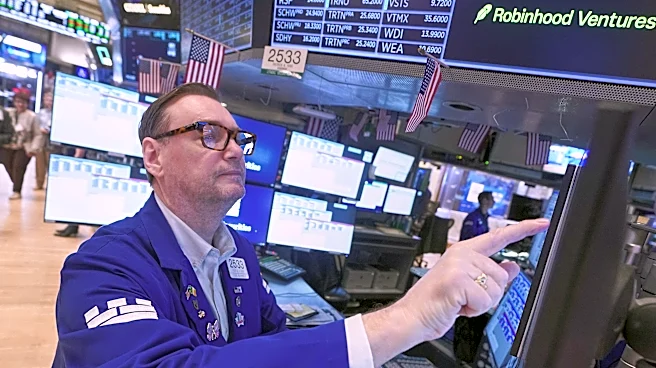
and financial stocks. Notably, Softbank shares increased by over 18%, while other companies like Ibiden and Sumco Corp also saw substantial gains. This market movement occurred after President Trump issued a warning to Iran, threatening higher-level bombings if a peace deal was not reached. Despite these geopolitical tensions, the U.S. stock market also experienced gains, with the S&P 500 and Nasdaq Composite reaching new highs.
Why It's Important?
The record-breaking performance of the Nikkei 225 highlights investor confidence in the region's economic resilience, even amidst geopolitical uncertainties. The surge in stock prices, particularly in technology and financial sectors, suggests a robust market outlook that could influence global economic trends. For the U.S., the rise in stock indices like the S&P 500 and Nasdaq Composite indicates a positive investor sentiment, potentially driven by optimism over resolving Middle Eastern conflicts. This development could have significant implications for international trade and economic policies, affecting stakeholders ranging from multinational corporations to individual investors.
What's Next?
The ongoing geopolitical tensions between the U.S. and Iran could lead to further market volatility. Investors and policymakers will likely monitor the situation closely, as any escalation could impact global oil prices and economic stability. Additionally, the potential for a peace agreement could shift market dynamics, influencing investment strategies and economic forecasts. Stakeholders, including governments and financial institutions, may need to adjust their approaches to mitigate risks associated with geopolitical developments.