



What's Happening?
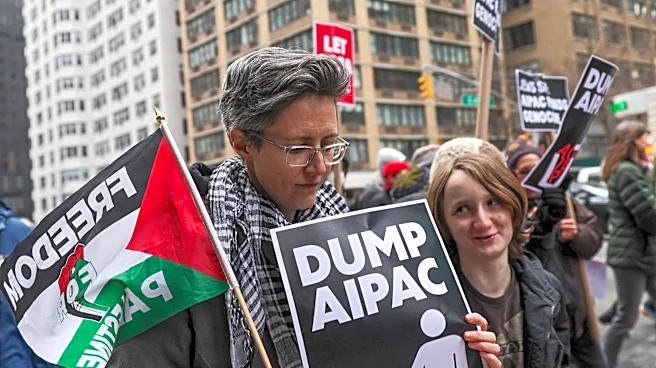
Israeli Prime Minister Benjamin Netanyahu's policies have inadvertently strengthened the Palestinian cause in the United States. His opposition to Palestinian statehood and the humanitarian crisis in Gaza have sparked international outrage, leading to widespread
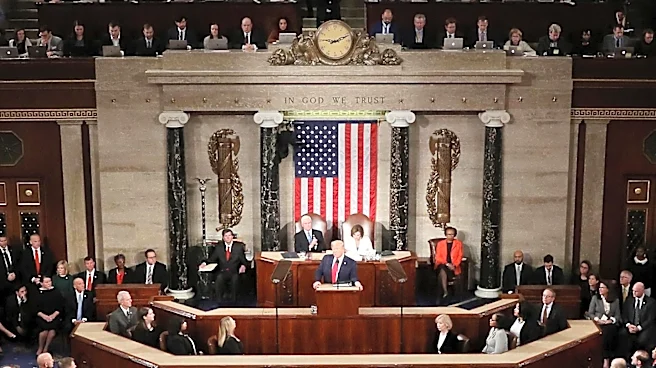
demonstrations across the U.S., particularly on college campuses. The crisis has provided an opportunity for Palestinian advocates to gain political traction, with calls to restrict military assistance to Israel gaining support among Senate Democrats. The shift in public opinion is reflected in recent polls showing increased favorability towards Palestinians over Israel, particularly among Democrats and younger voters.
Why It's Important?
The growing support for the Palestinian cause in the U.S. signifies a potential shift in American foreign policy and public opinion regarding the Israeli-Palestinian conflict. This change could influence future U.S. political decisions, including military aid to Israel and diplomatic relations. The increasing political activism and advocacy for Palestinian rights may also impact upcoming elections, as candidates align themselves with these emerging public sentiments. The situation highlights the complex interplay between domestic politics and international relations, as well as the influence of grassroots movements on policy-making.
What's Next?
As the U.S. approaches its election season, the Palestinian cause is likely to remain a significant issue in political discourse. Candidates may continue to distance themselves from pro-Israel groups, and there could be increased pressure on the U.S. government to condition military aid to Israel. The upcoming United Nations General Assembly may also serve as a platform for further advocacy and demonstrations. Additionally, the evolving public opinion may lead to more robust debates within the U.S. Congress regarding foreign policy and military assistance to Israel.