
What's Happening?
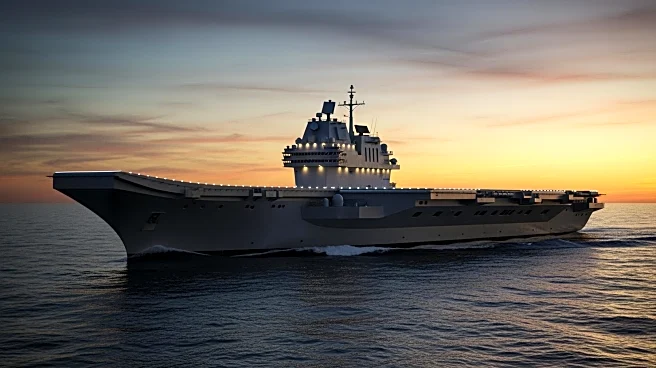
China has deployed its aircraft carrier Fujian for training operations, as revealed by satellite imagery. The Fujian, considered China's most advanced carrier, left its home port at Yulin Naval Base and
is currently engaged in military exercises in the Yellow Sea. This deployment coincides with a navigation warning issued by the Chinese Maritime Safety Administration for military operations in the Bohai Sea. The Fujian's movements are part of China's broader strategy to project naval power and counter the U.S. presence in the Pacific. The Pentagon's report indicates China's ambition to expand its carrier fleet significantly by 2049.
Why It's Important?
The deployment of the Fujian underscores China's growing military capabilities and its strategic intent to assert dominance in the South China Sea and beyond. This move is significant for U.S. interests in the region, as it challenges the U.S. naval presence and could alter the balance of power in the Pacific. The expansion of China's carrier fleet is part of a broader military modernization effort, which could have implications for regional security and U.S. defense strategies. The U.S. and its allies may need to reassess their naval deployments and strategies in response to China's increasing maritime capabilities.
What's Next?
The Fujian's training operations are expected to continue, with potential future deployments east of the First Island Chain. This could lead to increased tensions in the region, particularly with neighboring countries involved in maritime disputes with China. The U.S. and its allies may respond by enhancing their naval presence or conducting joint exercises to demonstrate their commitment to regional security. Additionally, China's continued military expansion may prompt further diplomatic engagements or negotiations to address security concerns in the Asia-Pacific region.