
What's Happening?
The Supreme Court has issued a 6-3 decision, granting the Trump administration a victory by allowing the enforcement of President Trump’s 'election integrity' executive order. This order restricts mail-in
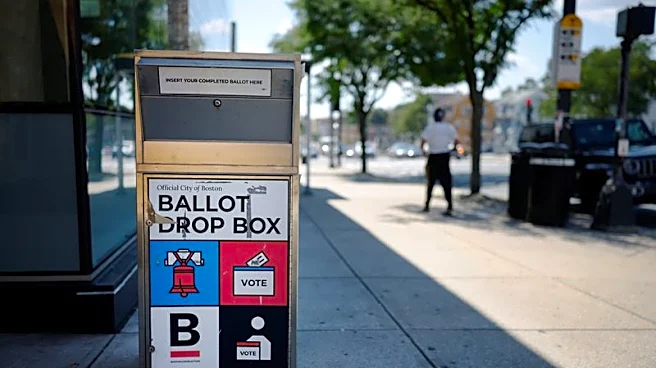
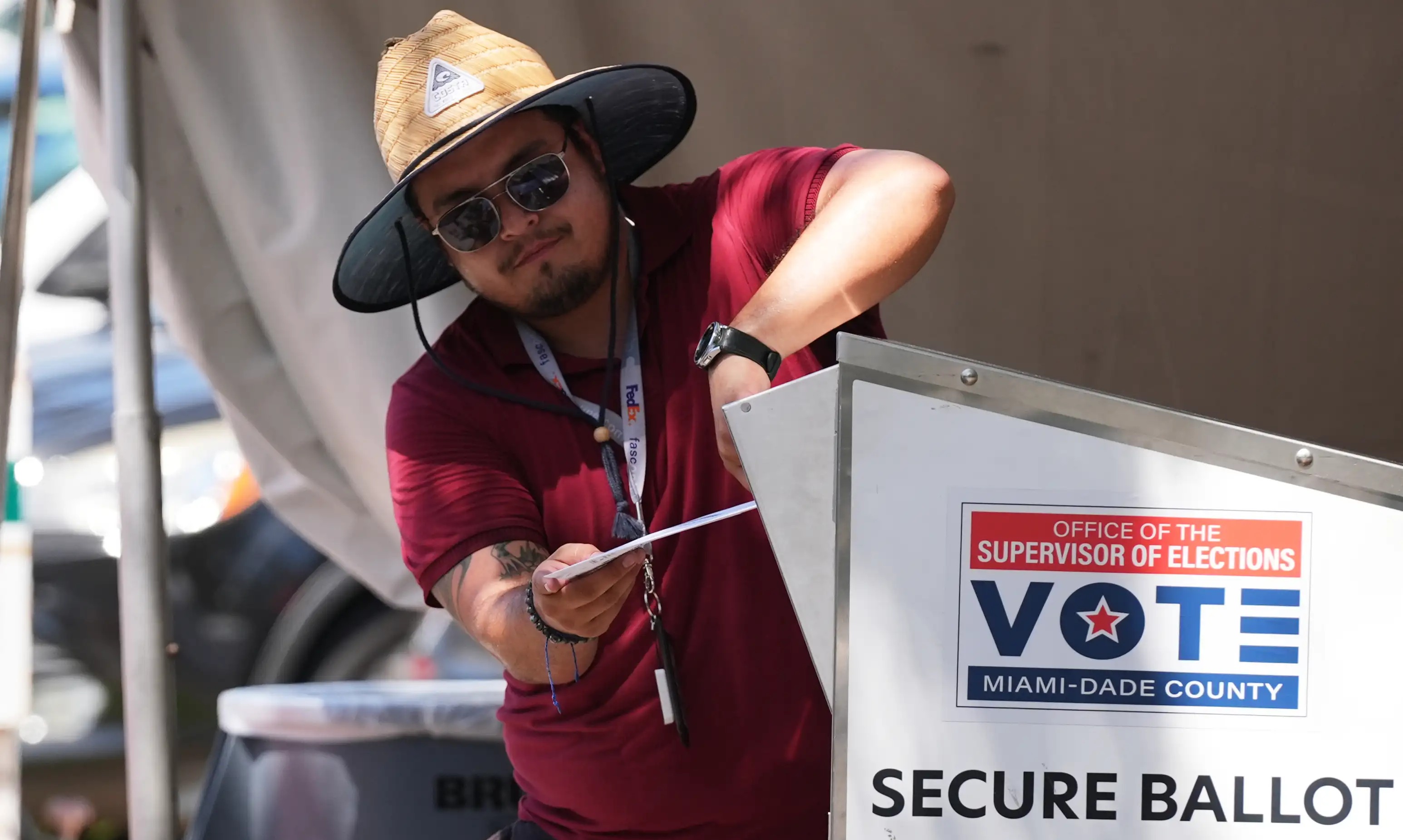
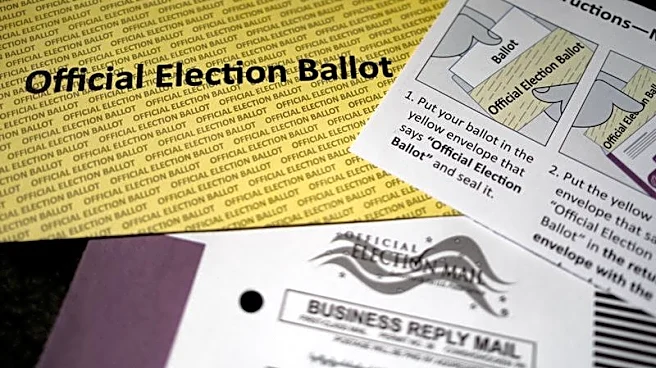
voting ahead of the upcoming November midterms. The high court lifted an injunction that had previously blocked the order in 23 states that had challenged it in July. Following this ruling, the U.S. Postal Service and the Justice Department have stated their intention to immediately implement the revised mail-ballot restrictions. The ruling specifically permits the U.S. Postal Service to cross-reference its distribution of mail-in ballots against a list of citizens maintained by the Department of Homeland Security. President Trump has consistently voiced concerns about the widespread use of mail-in voting, citing potential vulnerabilities to tampering and voter fraud. He previously criticized a high volume of mail-in ballots in the 2026 LA mayoral race primaries, suggesting that Republicans might struggle to win in California without changes to mail-in voting laws. The executive order, titled 'Preserving and protecting the integrity of American elections,' mandates federal agencies to compile citizenship-based lists of eligible voters and directs the U.S. Postal Service to deliver mail-in ballots exclusively to individuals on these approved lists. The court sided with the administration, clarifying that the executive order imposes requirements only on federal agencies and does not place new obligations on the states themselves, thus negating claims of concrete harm by the challenging states. Justices Sonia Sotomayor, Elena Kagan, and Ketanji Brown Jackson dissented.
Why It's Important?
This Supreme Court decision carries significant implications for the integrity and administration of U.S. elections, particularly concerning mail-in voting. The ruling empowers the federal government to implement stricter controls over who receives mail-in ballots, potentially impacting voter access and participation, especially in states that previously had less restrictive mail-in voting policies. For the Trump administration, this is a notable political victory, reinforcing its narrative about election integrity and concerns over voter fraud. The ability of the U.S. Postal Service to verify mail-in ballot recipients against Department of Homeland Security citizenship lists could lead to a reduction in the number of eligible voters receiving ballots, which could disproportionately affect certain demographics or newly registered voters. Critics of the order, who viewed it as a federal overreach into state-run elections, now face a legal precedent that prioritizes federal agency directives in this context. The decision could also influence future legislative efforts at both federal and state levels regarding election procedures, potentially leading to more stringent voter identification and ballot distribution requirements. The outcome is likely to be closely watched by political parties, advocacy groups, and voters as the midterms approach, shaping strategies for voter engagement and legal challenges.
What's Next?
Following the Supreme Court's decision, the U.S. Postal Service and the Justice Department are expected to promptly implement the revised mail-ballot restrictions. This will involve the immediate process of checking mail-in ballot distributions against the Department of Homeland Security's citizenship lists. While the current ruling addresses the injunction that prevented the order's implementation, it does not definitively rule on the overall lawfulness of the executive order itself. This leaves open the possibility for further legal challenges against the order in the future. Political leaders and civil society groups are likely to react to this development, with some celebrating the move as a step towards greater election security and others criticizing it as a barrier to voting access. Advocacy organizations focused on voting rights may explore new legal avenues to challenge the order's broader implications or work to mitigate its impact on voters. States that previously challenged the order will need to adapt their election procedures to align with the federal directive, potentially leading to changes in how they manage mail-in voting for the upcoming midterms. The ongoing debate surrounding election integrity and voter access is expected to intensify as the November midterms draw closer, with this ruling serving as a key point of contention.
Beyond the Headlines
The Supreme Court's decision on mail-in voting restrictions delves into deeper constitutional and societal implications beyond the immediate electoral impact. At its core, the case highlights the ongoing tension between federal authority and states' rights in election administration, a foundational aspect of U.S. governance. While the court clarified that the executive order primarily targets federal agencies, the practical effect is a federal influence on state election processes, raising questions about the balance of power. Ethically, the debate centers on the trade-off between election security and voter access. Proponents argue that stricter controls prevent fraud and bolster public confidence in election outcomes, while opponents contend that such measures can disenfranchise eligible voters, particularly minority groups or those with limited access to identification. The ruling could also contribute to a broader cultural shift in how Americans perceive the security and accessibility of their voting system, potentially deepening partisan divides on electoral reform. Furthermore, the emphasis on citizenship-based voter lists could spark discussions about immigration and national identity in the context of civic participation. The long-term implications might include a re-evaluation of federal election laws, increased litigation over voting rights, and a sustained focus on the role of federal agencies in safeguarding election integrity, potentially setting precedents for future executive actions related to voting.