






What's Happening?
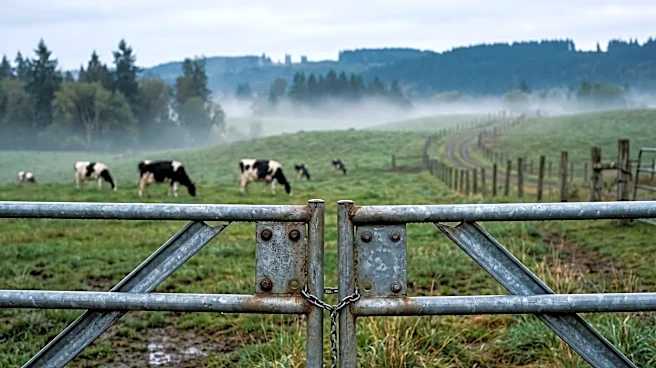
Wade and Teresa King, owners of King Ranch in Washington, along with Pacific Legal Foundation senior attorney Oliver Dunford, have voiced concerns that losing their ongoing legal battle would pose an 'existential threat' to their generations-old family
legacy. The ranchers are currently fighting a $267,540 fine imposed by the Washington State Department of Ecology and are pushing for a jury trial. This dispute highlights a significant conflict between environmental regulation and the long-standing operations of a family-owned agricultural business.
Why It's Important?
This legal battle is important as it represents a broader conflict between environmental regulations and property rights, particularly for agricultural businesses with deep historical roots. The substantial fine and the potential loss of a multi-generational family ranch underscore the severe economic and personal impact that regulatory enforcement can have. For the U.S., this case could set precedents regarding the balance between state environmental protection efforts and the rights of landowners and businesses. It also brings to light the challenges faced by family-owned enterprises in navigating complex legal and regulatory landscapes, potentially influencing policy discussions on agricultural support and environmental compliance.
What's Next?
The immediate next step for the King Ranch owners is their push for a jury trial, which will determine the outcome of the $267,540 fine and potentially the future of their ranch. The legal proceedings will be closely watched by other ranchers, environmental groups, and legal experts. Depending on the verdict, this case could influence how environmental regulations are enforced against agricultural businesses in Washington and potentially other states. It may also prompt legislative discussions on clearer guidelines for environmental compliance and support mechanisms for family farms facing similar challenges.
Beyond the Headlines
This story delves into the deeper themes of tradition versus progress, and the tension between individual livelihoods and collective environmental goals. The 'existential threat' to the King Ranch's legacy speaks to the erosion of traditional American family businesses in the face of modern regulatory pressures. It raises questions about the fairness and proportionality of environmental fines, and whether current legal frameworks adequately protect the heritage and economic stability of long-standing agricultural operations. The case could become a symbol for the broader debate on land use, conservation, and the future of rural communities in the U.S.