









What's Happening?
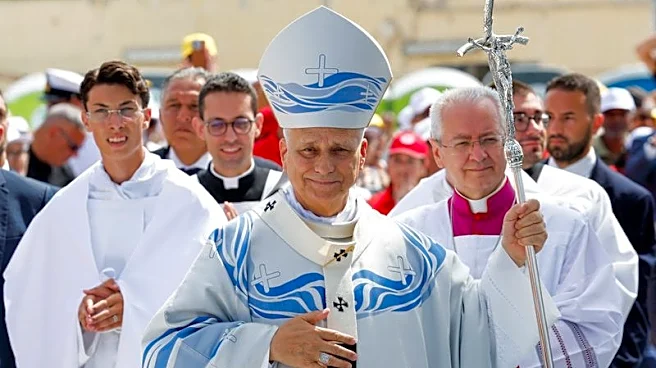
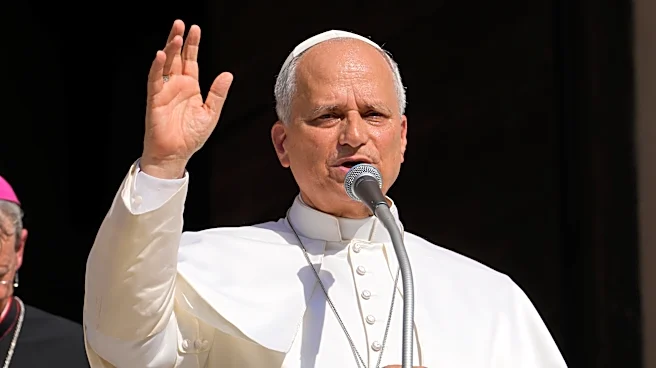
Pope Leo XIV, the first American pontiff, marked July 4 with a visit to Lampedusa, Italy, a key entry point for migrants crossing the Mediterranean Sea. During his visit, he appealed to Americans to welcome immigrants with 'compassion and generosity.'
The pope's visit included a stop at the 'Door to Europe' memorial, which honors migrants who have died attempting to cross the Mediterranean. He also participated in an open-air Mass, where he called for European leaders to implement plans for receiving, protecting, supporting, and integrating migrants. The pope emphasized the importance of assisting developing countries to prevent forced emigration. His visit coincided with the United States' 250th anniversary of independence, and he highlighted the historical contributions of immigrants to the nation.
Why It's Important?
Pope Leo XIV's visit to Lampedusa and his message of compassion towards immigrants hold significant implications for U.S. immigration policy and societal attitudes. By urging Americans to welcome immigrants, the pope is reinforcing the historical narrative of the U.S. as a nation built by immigrants. His call for compassion and generosity aligns with ongoing debates in the U.S. about immigration reform and the treatment of migrants. The pope's message may influence public opinion and potentially impact policy decisions regarding immigration. Additionally, his emphasis on international cooperation to support developing countries highlights the interconnected nature of global migration issues.
What's Next?
Following Pope Leo XIV's visit, there may be increased dialogue within the U.S. regarding immigration policies and the treatment of migrants. Political leaders and civil society groups might respond to the pope's call for compassion by advocating for more humane immigration practices. The pope's emphasis on international cooperation could lead to discussions about U.S. involvement in global efforts to address the root causes of migration. Additionally, the pope's visit may inspire faith-based organizations to play a more active role in supporting immigrants and advocating for policy changes.