



What's Happening?
The U.S. House of Representatives narrowly failed to pass the ROTOR Act, a significant aviation safety bill, on Tuesday. The legislation, which had already passed the Senate, aimed to require the installation of Automatic Dependent Surveillance-Broadcast
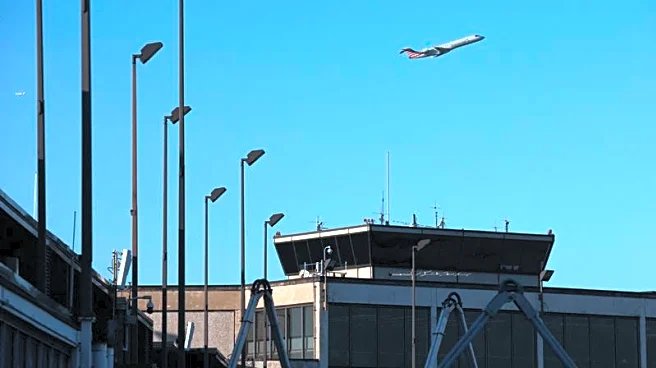
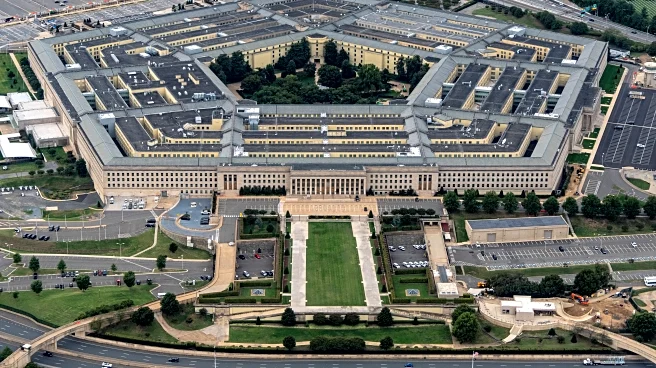
(ADS-B) systems on aircraft by 2031. This measure was proposed in response to a deadly midair collision in January 2025 between an American Airlines jet and a U.S. Army helicopter, which resulted in 67 fatalities. Despite receiving 264 votes in favor, the bill needed a two-thirds majority to pass under fast-track rules. The ROTOR Act was supported by the National Transportation Safety Board (NTSB) and some lawmakers, but faced opposition from the Pentagon and other military interests due to concerns about budgetary and security implications.
Why It's Important?
The failure to pass the ROTOR Act underscores the complexities of implementing aviation safety reforms in the U.S. The proposed ADS-B systems are considered vital for preventing future midair collisions, a critical safety issue for both civilian and military aviation. The bill's rejection highlights the tension between enhancing safety measures and addressing operational and financial concerns, particularly for military operations. This decision impacts various stakeholders, including airlines, military, and general aviation groups, who must navigate the implications of potential regulatory changes. The outcome also reflects broader challenges in achieving legislative consensus on safety measures, despite clear evidence of their potential benefits.
What's Next?
Following the bill's failure, the House Transportation Committee plans to consider a rival aviation safety bill that addresses a broader range of NTSB recommendations. This alternative legislation could be taken up as soon as next week, potentially leading to further legislative action. Meanwhile, advocates for the ROTOR Act, including some lawmakers and victim families, are expected to continue pushing for its passage, emphasizing the need for immediate safety reforms. The ongoing discussions may lead to new proposals or amendments aimed at reconciling the different approaches to aviation safety.