



What's Happening?
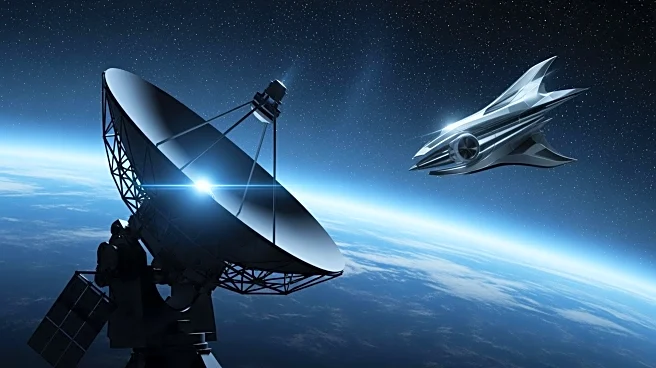
Two NATO-nation intelligence services have indicated that Russia is developing a new anti-satellite weapon aimed at disrupting Elon Musk's Starlink network. The weapon, described as a 'zone-effect' system, would deploy hundreds of thousands of dense pellets
to disable multiple satellites simultaneously. This development is seen as an attempt to curb Western space superiority, which has been instrumental in supporting Ukraine during Russia's invasion. Analysts have raised concerns about the potential chaos such a weapon could cause in orbit, affecting not only Starlink but also other space systems. The intelligence findings were shared with the Associated Press under conditions of anonymity, and the conclusions have not been independently verified. France's Space Command has noted Russia's recent hostile actions in space but did not comment on the specific findings.
Why It's Important?
The development of an anti-satellite weapon by Russia could have significant implications for global space security and the ongoing conflict in Ukraine. Starlink has been crucial for Ukraine's military and civilian communications, and its disruption could impact Ukraine's defense capabilities. Additionally, the deployment of such a weapon could lead to widespread collateral damage in space, affecting satellites used by Russia and China for communications and defense. This raises questions about the strategic risks Moscow might face if it proceeds with this plan. The potential for increased space debris and the disruption of satellite services could have far-reaching consequences for international space operations and security.
What's Next?
The timeline for the deployment or testing of this weapon remains unclear, as details are considered too sensitive to share. However, the development is reportedly active, suggesting that Russia may be advancing its capabilities in space warfare. The international community, particularly countries reliant on satellite technology, may need to consider diplomatic or strategic responses to mitigate the risks posed by such developments. The situation could lead to increased tensions in space and necessitate discussions on space security and the prevention of weaponization.