
What's Happening?
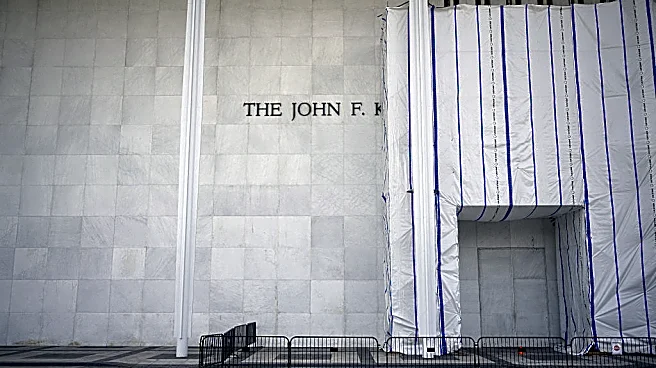
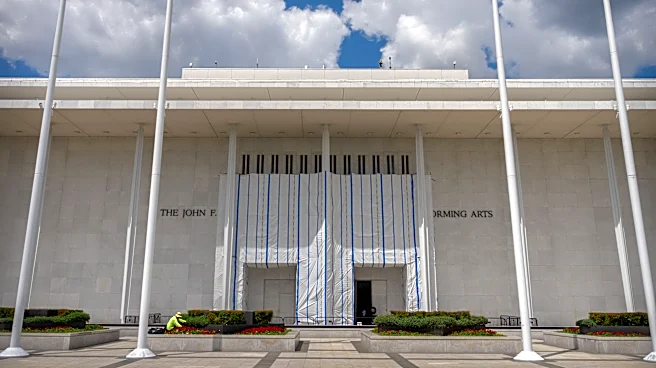
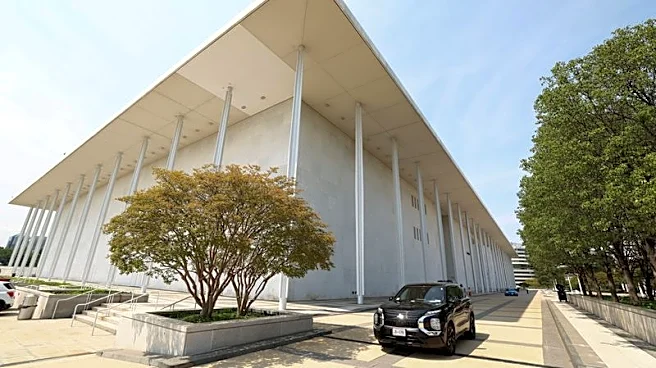
The Kennedy Center's board has informed a federal court that it will not restore President Donald Trump's name to the building, reversing an earlier decision made less than a week prior. This development
follows an initial pledge by the board to reinstate President Trump's name. The board has stated that no changes will be made until after the Labor Day holiday, specifically citing September 8th as the earliest possible date. This delay is intended to allow those challenging the building's name in court sufficient time to gather necessary legal documents and information, according to the Associated Press. The decision marks another turn in the ongoing dispute regarding the naming of the Kennedy Center building.
Why It's Important?
This reversal by the Kennedy Center board highlights the persistent political and cultural sensitivities surrounding the legacy and public recognition of President Trump. The back-and-forth decisions reflect the deep divisions within public institutions regarding how to acknowledge or disassociate from past administrations. For the Kennedy Center, a prominent national cultural institution, the naming controversy can impact its public image, donor relations, and its ability to maintain broad bipartisan support. The involvement of a federal court underscores the legal complexities and the potential for prolonged litigation over such symbolic gestures, setting a precedent for how similar disputes might be handled in other public spaces or institutions. The delay also indicates an attempt to navigate legal challenges and public opinion carefully.
What's Next?
The immediate next step involves the period leading up to and immediately following September 8th, during which those challenging the building's name are expected to gather legal documentation. The federal court will likely continue to oversee the proceedings, and further legal filings or hearings could occur. Stakeholders, including political leaders, advocacy groups, and the public, will be closely watching the Kennedy Center's actions and any subsequent court decisions. The board's final decision, once implemented, could either solidify its stance against restoring President Trump's name or face renewed pressure and legal challenges depending on the outcome of the legal information gathering. The situation could also prompt further public discourse on the appropriate recognition of former presidents in national institutions.
Beyond the Headlines
The ongoing debate over the naming of the Kennedy Center building delves into broader questions of historical memory, political polarization, and the role of cultural institutions in reflecting national identity. The controversy underscores the challenges faced by organizations in balancing tradition, public sentiment, and political pressures. It also highlights how symbolic gestures, such as naming rights, can become battlegrounds for ideological conflicts. The legal intervention further complicates matters, suggesting that such disputes are not merely administrative but can involve fundamental interpretations of public trust and institutional autonomy. This situation could influence how other national landmarks and cultural centers approach similar decisions regarding the recognition of political figures, potentially leading to more formalized policies or increased scrutiny in the future.