



What's Happening?
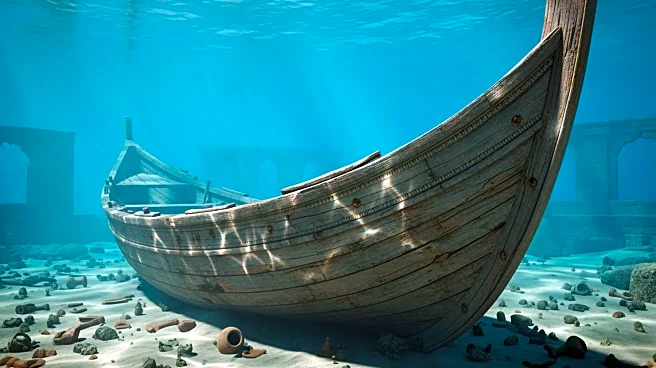
Underwater archaeologist Franck Goddio and his team from the Institut Européen d’Archéologie Sous-Marine have uncovered the remains of an ancient Egyptian pleasure boat, known as a thalamagos, at the submerged port off Alexandria's harbor in Egypt. The
discovery includes 28-meter long timbers that were part of a 35-meter long vessel, which was used for feasts and ceremonies. This is the first time such a boat has been found, despite being documented in historical texts by Strabo, a Greek geographer. The ship, featuring a central pavilion and Greek graffiti, is believed to have been built in Alexandria and used for ritual purposes, possibly linked to the temple of Isis and the reign of Cleopatra.
Why It's Important?
This discovery provides significant insights into the cultural and historical context of ancient Alexandria, particularly during the time of Cleopatra. The pleasure boat, with its luxurious design and ceremonial use, highlights the opulence and religious practices of the era. The find also contributes to the understanding of ancient naval architecture and the role of such vessels in religious ceremonies. Additionally, it underscores the potential for further archaeological discoveries in the submerged Portus Magnus, which could reveal more about the lives of historical figures like Julius Caesar, Mark Antony, and Cleopatra.
What's Next?
The ongoing excavation at the Portus Magnus may continue to yield significant archaeological finds, offering deeper insights into ancient Egyptian and Greco-Roman history. Goddio and his team are likely to further explore the connection between the temple of Isis and Cleopatra, potentially uncovering more artifacts that shed light on the religious and cultural practices of the time. The discovery also raises the possibility of finding additional ships or artifacts that could provide a more comprehensive understanding of the ancient port's significance.
Beyond the Headlines
The discovery of the pleasure boat not only enriches the historical narrative of Alexandria but also highlights the impact of natural phenomena on ancient civilizations. The sinking of the Portus Magnus due to rising sea levels and natural disasters serves as a reminder of the vulnerability of coastal cities to environmental changes. This aspect of the find may prompt further research into the environmental history of the region and its influence on the development and decline of ancient societies.