
What's Happening?
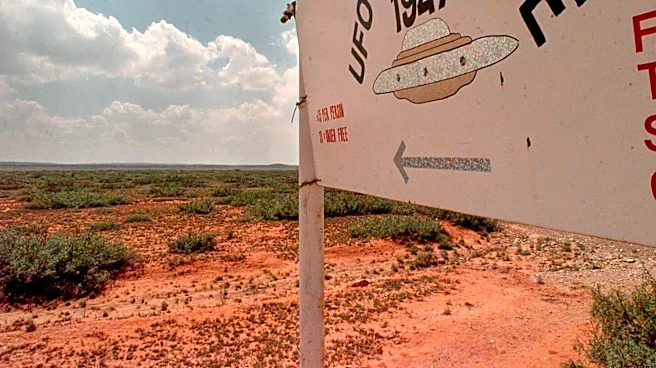
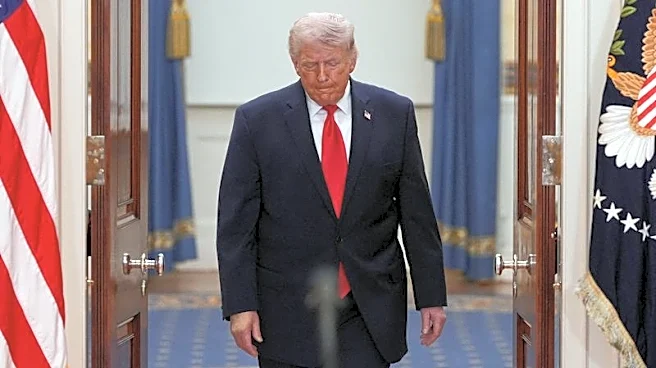
President Trump has issued a directive to begin the process of identifying and releasing government files related to alien and extraterrestrial life, unidentified aerial phenomena (UAP), and unidentified flying
objects (UFOs). This move comes amid recent Congressional hearings where claims about alien technologies and bodies were discussed. The directive aims to bring transparency to these complex matters, which have long intrigued both the public and scientific communities. The Galileo Project at Harvard University, led by Avi Loeb, is focused on systematic scientific research into extraterrestrial technological signatures. The project seeks to move beyond anecdotal observations to validated scientific inquiry. The release of these files could have significant implications for understanding extraterrestrial life and the government's knowledge of such phenomena.
Why It's Important?
The directive from President Trump to release government files on extraterrestrial life and UAPs is significant as it could potentially alter public perception and scientific understanding of extraterrestrial phenomena. The move may lead to increased transparency and could spark further scientific research into the existence of extraterrestrial life. For the scientific community, access to previously classified information could provide new data for research and analysis, potentially advancing the field of astrobiology and the search for extraterrestrial intelligence. The public's interest in UFOs and extraterrestrial life has been longstanding, and this directive could satisfy some of the curiosity and demand for disclosure. However, it also raises questions about national security and the implications of revealing such information.
What's Next?
The release of government files on extraterrestrial life and UAPs is expected to generate significant interest and debate among scientists, policymakers, and the public. Researchers like Avi Loeb are prepared to analyze declassified incidents to advance scientific understanding. The directive may lead to further Congressional hearings and discussions on the implications of extraterrestrial life. Additionally, the release of older data could significantly advance scientific research, as technologies from half a century ago are no longer strategically sensitive. The scientific community will likely continue to push for more transparency and access to information that could shed light on the existence of extraterrestrial life.
Beyond the Headlines
The directive to release government files on extraterrestrial life touches on broader ethical and philosophical questions about humanity's place in the universe. The potential discovery of extraterrestrial life could challenge existing scientific, theological, and cultural worldviews. It may also lead to the development of new fields of study, such as astrotheology, which explores the theological implications of extraterrestrial life. The bureaucratic dimension of the directive highlights the challenges of balancing national security with scientific inquiry and public interest. As discussions around disclosure continue, the implications for society and culture will be profound, potentially reshaping our understanding of life beyond Earth.