





What's Happening?
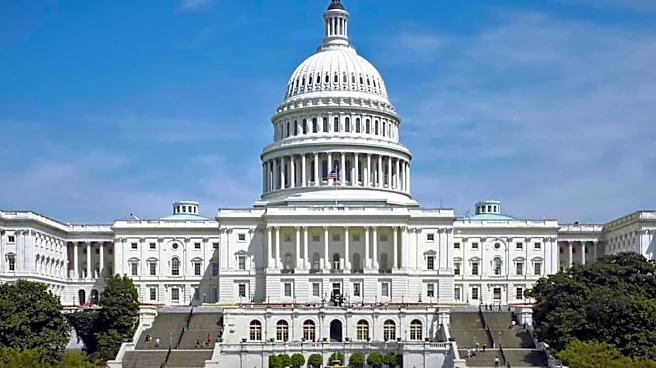
The U.S. House of Representatives has overwhelmingly approved legislation that would require all new cars, trucks, and SUVs to include AM radio as standard equipment, at no additional cost to consumers. This bill, known as the AM Radio for Every Vehicle
Act, will now proceed to the Senate. The legislation directs the National Highway Traffic Safety Administration to enforce this requirement. This move comes despite a trend among automakers, including BMW, Rivian, Tesla, and Volvo, to remove AM radio from new vehicles, often in favor of streaming services. Ford had also initially removed AM radio from some models but has since reversed its decision. Automakers have cited electromagnetic interference from electric motors in EVs as a reason for degrading AM signal quality. Proponents of the mandate, however, argue that AM radio is crucial for disseminating critical information during emergencies due to its long-distance signal capabilities. The effort has garnered significant bipartisan support from Democrats and Republicans, the broadcast industry, emergency responder organizations, and former Federal Emergency Management Agency administrators.
Why It's Important?
The potential mandate for AM radio in new vehicles carries significant implications for both consumers and the automotive industry. For consumers, particularly those in rural areas or during emergencies, AM radio serves as a vital communication channel, often being the most reliable source of information when other systems fail. This legislation aims to preserve that access, ensuring public safety and preparedness. For automakers, the mandate represents a potential reversal of their current trajectory towards software-defined vehicles and streaming services. It could impose additional costs and design challenges, especially for EV manufacturers who have highlighted issues with electromagnetic interference affecting AM signal quality. The bipartisan support for this bill underscores a broader recognition of AM radio's role in national infrastructure, moving beyond its traditional entertainment function to a critical public service. The outcome will determine whether technological advancement in vehicles will be balanced with established emergency communication needs.
What's Next?
The AM Radio for Every Vehicle Act will now move to the Senate for consideration. There is a strong indication that the Senate may follow the House's lead, as Senators Ed Markey (D-Mass.) and Ted Cruz (R-Texas) co-sponsored an earlier version of the bill and secured 60 co-sponsors, a critical threshold to overcome a filibuster. If passed by the Senate and signed into law, the National Highway Traffic Safety Administration will be tasked with implementing the new regulations, requiring automakers to integrate AM radio into all new passenger vehicles. Automakers like Tesla and Rivian, which have largely omitted AM receivers from their base models, would need to re-evaluate their vehicle designs and offerings. The legislation's progression will likely involve continued lobbying efforts from both the automotive industry, which may seek exemptions or alternative solutions, and proponents of AM radio, who will push for its swift enactment to safeguard emergency communication capabilities.
Beyond the Headlines
This legislative push highlights a deeper tension between technological innovation and the preservation of legacy infrastructure deemed essential for public good. While automakers are keen to advance with digital and streaming technologies, the government's intervention reflects a societal value placed on resilient, accessible communication, especially in times of crisis. The debate also touches upon the role of government in regulating product features for public safety, even when those features might be considered outdated by some industries. Furthermore, it underscores the enduring power of traditional broadcast media in an increasingly digital world, particularly its unique ability to reach broad audiences without relying on internet connectivity or cellular networks. The outcome could set a precedent for future regulations concerning essential services in new technologies, balancing market forces with public interest and national security considerations.